

Business professionals analyzing data dashboards and performance reports to improve operational efficiency.

How Data-Driven Decisions Improve Business Efficiency

In the competitive business landscape of today, companies depend on accurate information to make decisions that are faster and smarter. Data-driven decision making has become a key strategy to improve business efficiency, productivity, and profitability. Instead of working with assumptions or guesswork companies use data, analytics and insights in real-time to drive operations and strategic planning.

Data-driven decisions help organizations understand customer behavior, track performance, optimize processes, reduce operational costs and find new business opportunities. Whether it’s a small business or a large enterprise, data can be leveraged effectively to make informed decisions that help the company improve its overall efficiency and grow in the long run. 

Improves Operational Efficiency

Operational efficiency is among the biggest benefits of data-driven decisions. Companies generate massive amounts of data every day through sales, customer interactions, marketing campaigns, inventory systems, and employee performance tracking.

Organizations can use this data to diagnose operational bottlenecks, decrease delays, and enhance workflow management. Companies can track performance in real-time and quickly adapt to boost productivity and resource utilization.

Operational efficiency can help businesses to save time, cut down on waste, and increase overall business performance. 

Supports Better Decision-Making

Companies can use data-driven strategies to make decisions based on facts instead of assumptions. Accurate business data provides valuable insights into market trends, customer preferences, financial performance and operational challenges.

This information can help managers and business leaders make better decisions about pricing, marketing, staffing, inventory management and expansion plans. “Good data reduces uncertainty and gives confidence in your business strategy.

Improved decisions lead to improved business results and better long-term planning. 

Enhances Customer Understanding

Understanding customer behavior is the key to business growth. Data analytics helps organizations analyze customer preferences, buying behaviors, feedback, and engagement levels.

Businesses can use this information to personalize products, improve customer support, and create targeted marketing campaigns. Customer-centric strategies increase satisfaction, loyalty and retention.

Understanding customer needs enables companies to provide better experiences and build stronger relationships.

Improves Employee Productivity

Data-driven decisions can help businesses identify unnecessary costs, and get better at managing costs. But by analyzing financial and operational data, companies can optimize resource allocation and reduce waste.

For example, businesses can use it to monitor inventory levels to prevent overstocking, track employee productivity, and optimize supply chain management. Automation and analytics tools also cut down on manual labor and administrative costs.

Cost optimization improves profitability without compromising the quality of operations. 

Strengthens Marketing Strategies

Marketing campaigns are more effective as data is used to learn about audience behavior and campaign performance. Analytics tools help you track website traffic, customer engagement, conversion rates and advertising performance.

This data can be used by companies to refine targeting, optimize budgets and build personalized marketing strategies. Data-driven marketing is helping to boost customer acquisition efforts and improve ROI.

Businesses can also see what marketing channels are most effective. 

Supports Risk Management

Operations, finance, competition and market change are areas where every company has risks. Data analytics allows companies to detect potential risks early and make preventive decisions.

Predictive analytics can help you to anticipate market trends, customer behavior and operational challenges before they become big problems. Accurate data insights allow businesses to plan strategies and reduce uncertainties better.

Effective risk management is supported by real-time business intelligence. 

Encourages Innovation and Growth

Data-driven companies are better positioned to discover new opportunities and respond to shifts in market demand. Analytics can help organizations identify trends in customers, product performance and market gaps.

Companies can use these insights to improve their products, launch new services and develop new business strategies. Data-driven innovation helps companies to stay competitive and achieve sustainable growth.

Data-driven organizations can respond faster to industry changes and customer expectations.

Importance of Business Intelligence Tools

Today companies use Business Intelligence (BI) tools that collect, analyze and visualize data. Platforms such as Power BI, Tableau, Google Analytics and CRM dashboards help organizations make faster and more accurate decisions.

The tools present reports, dashboards and performance metrics that make data analysis easier and strategic planning easier. Business intelligence systems improve organizational efficiency and cross-departmental visibility. 

Conclusion

The ability to make data-driven decisions has been a crucial factor in boosting business efficiency and ensuring long-term success. Analytics, automation and business intelligence tools can help organizations run more efficiently, lower costs, better understand customers and make smarter strategic decisions.

“Companies that rely on data they can trust can respond more quickly to market changes, increase productivity and create stronger growth opportunities. Data is one of the most valuable assets for building efficient and competitive businesses in today’s digital world. 

FAQs

1. What are data-driven decisions?

Data-driven decisions are business decisions made using data analysis, insights, and measurable information instead of assumptions.

2. How do data-driven decisions improve business efficiency?

They help optimize operations, reduce costs, improve productivity, and support better strategic planning.

3. Why is data analytics important for businesses?

Data analytics helps businesses understand customer behavior, monitor performance, identify trends, and improve decision-making.

4. Which tools are used for data-driven business analysis?

Popular tools include Power BI, Tableau, Google Analytics, CRM systems, and Excel dashboards.

5. Can small businesses benefit from data-driven strategies?

Yes, small businesses can use data to improve operations, marketing, customer service, and overall business growth.
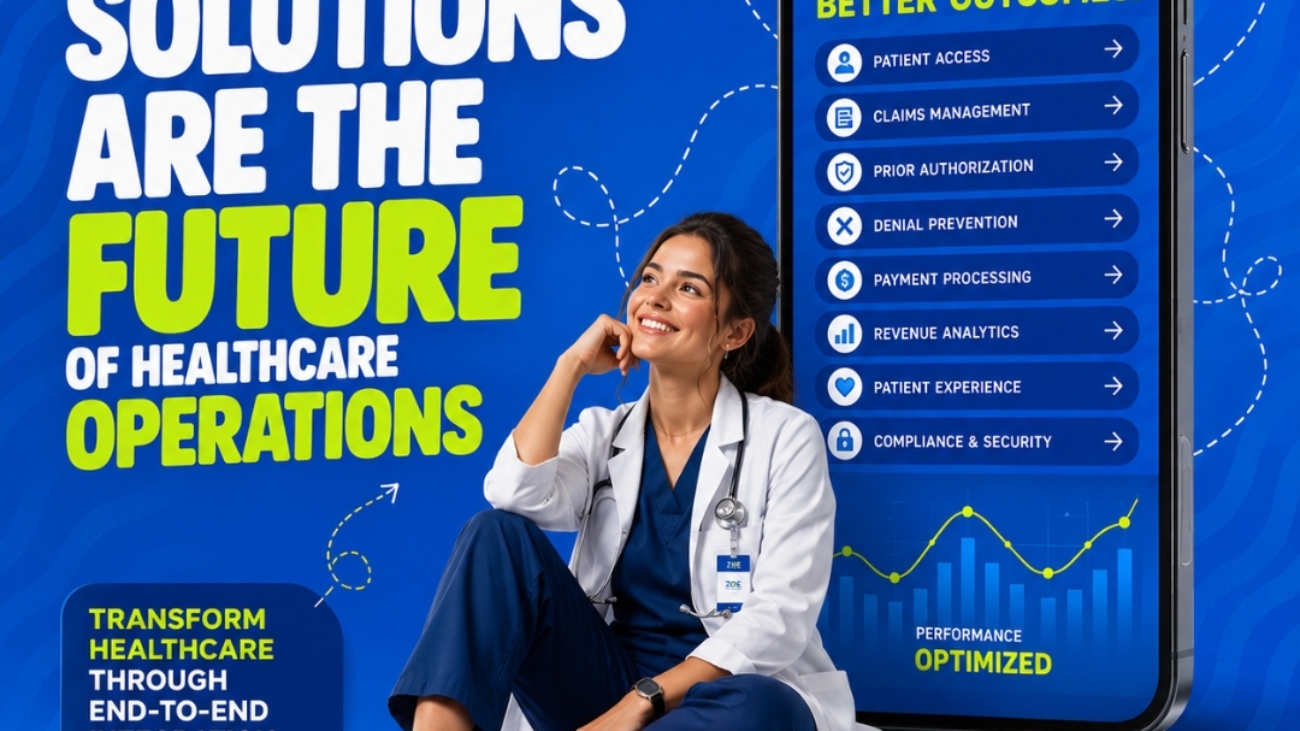

Healthcare professionals using integrated digital healthcare systems to manage patient care and hospital operations efficiently.

Why End-to-End Solutions Are the Future of Healthcare Operations

Patient demands are increasing, administrative workloads are growing, regulations are changing and digital technologies are being adopted at a rapid pace – all of which is making healthcare operations more and more complex. Communication breakdowns, delays, billing errors, and operational inefficiencies are often the result of isolated legacy systems. That’s why end-to-end healthcare solutions are the future of healthcare operations.

End-to-end solutions combine a range of healthcare functions into one integrated system, such as patient registration, appointment scheduling, billing, medical records, communication, insurance processing, analytics and reporting. Such integrated platforms help healthcare providers improve efficiency, reduce manual work, enhance patient experience and make faster decisions. In this blog, we will talk about the reasons why end-to-end solutions are transforming healthcare operations and the future of the healthcare industry. 

Improved Operational Efficiency

One of the biggest advantages of end-to-end healthcare solutions is better operational efficiency. Every day, healthcare organizations manage massive amounts of patient data, appointments, billing processes, and administrative tasks. Disconnected systems across different departments slow down and complicate workflows.

Integrated end-to-end systems link all operations in one platform, reducing duplication of work and increasing coordination between departments. This enables healthcare providers to perform the tasks faster, cut down delays and increase overall productivity.

Automation is another aspect of these systems, reducing manual paperwork and routine administrative tasks, allowing staff to spend more time with patients. 

Better Patient Experience

Today’s patients want faster services, easy communication, digital access and transparent healthcare processes. End-to-end healthcare solutions ease the patient journey by reducing the difficulty of appointments, access to digital records, billing, and communication.

Patients can schedule appointments online, receive automated reminders, get reports in digital formats, and communicate with healthcare providers more easily. This offers a better and more convenient healthcare experience.

Integrated systems can also cut down on waiting times and improve care coordination, leading to increased patient satisfaction and trust. 

Seamless Data Management and Communication

Accurate patient information is critical for healthcare providers to diagnose, treat and bill patients. End-to-end systems mean that patient data is centralized and available in real time in departments.

Doctors, nurses, billing teams, laboratories and administrative staff all have access to the same current information, immediately. This improves communication, reduces data errors and enables faster decision making.

Additionally, centralized systems reduce the risk of lost records, duplicate entries, and miscommunication between departments. 

Enhanced Revenue Cycle Management

Revenue Cycle Management (RCM) is one of the most critical areas in healthcare operations. End-to-end healthcare solutions combine billing and coding, insurance verification, claims processing and payment tracking into one workflow.

That means fewer billing errors, faster reimbursements, fewer claim denials and improved cash flow. Automated RCM systems also enable healthcare providers to better monitor financial performance.

By streamlining financial operations, healthcare organizations can improve profitability and maintain better financial stability. 

Support for Digital Healthcare Transformation

The healthcare industry is rapidly moving towards digital transformation and end to end solutions play a major role in this transition. Telemedicine, cloud-based systems, AI-driven automation, and remote patient monitoring technologies are more efficient when combined into one connected platform.

End-to-end systems improve access, communications and operational management for digital healthcare services. Connected technology enables healthcare organizations to respond more quickly to changing patient expectations and industry needs. 

Better Decision-Making Through Analytics

Today’s healthcare systems generate massive amounts of operational and clinical data. End-to-end healthcare solutions offer analytics and reporting tools to enable organizations to track performance, patient trends, financial data and operational efficiency.

Healthcare managers can leverage this data to recognize bottlenecks, enhance staffing, optimize resources and make smart business decisions. Real-time dashboards and predictive analytics help healthcare providers respond more quickly to operational issues.

Data-driven decision making improves patient outcomes and organizational performance. 

Reduced Costs and Resource Optimization

Disconnected systems often add to operational costs through duplication of effort, inefficiencies and delays in communication. End-to-end healthcare solutions automate workflows, improve resource utilization and reduce administrative burdens, lowering costs.

Healthcare providers can more effectively optimize staffing, inventory management, scheduling, and billing processes. This increases productivity and reduces unnecessary operational costs.

Optimizing costs enables healthcare organizations to dedicate more resources to the improvement of patient care and medical technologies. 

Improved Compliance and Data Security

Healthcare organizations have strict rules about patient privacy, billing, and data security. Standardized workflows and thorough record keeping in end-to-end healthcare systems improve compliance.

The integrated systems of today also include advanced cybersecurity features such as encryption, access control, and secure cloud storage. This helps safeguard sensitive patient information and reduces the risk of data breaches.

To maintain patient trust and avoid legal trouble, robust compliance and data security are essential. 

Conclusion 

End-to-end solutions are the future of healthcare operations, streamlining complex processes, improving efficiency and patient care, and enabling digital transformation. By integrating healthcare functions into one connected platform, healthcare providers can reduce errors, improve communication, optimize resources and make better decisions.

Looking ahead, organizations that take a comprehensive approach to healthcare will be better positioned to meet the rising needs of patients, operational challenges and to efficiently deliver quality healthcare in an industry that is constantly evolving. 

FAQs

1. What are end-to-end healthcare solutions?

End-to-end healthcare solutions are integrated systems that manage multiple healthcare operations such as appointments, billing, patient records, communication, and reporting in one platform.

2. How do end-to-end solutions improve healthcare operations?

They improve efficiency, reduce manual work, streamline communication, and support faster decision-making.

3. Why are integrated healthcare systems important?

Integrated systems improve data sharing, reduce errors, enhance patient care, and simplify workflow management.

4. How do end-to-end solutions help Revenue Cycle Management?

They automate billing, claims processing, insurance verification, and payment tracking to improve cash flow and reduce denials.

5. Are end-to-end healthcare systems secure?

Yes, modern systems use advanced security features such as encryption, secure cloud storage, and access controls to protect patient data.

AI in Infusion Centers

AI in Infusion Centers: Compliance Risks, HIPAA Challenges 2026

Artificial Intelligence is rapidly becoming a cornerstone of healthcare operations across the United States. From automating prior authorizations and clinical documentation to improving billing accuracy and patient scheduling, AI is helping healthcare providers operate more efficiently than ever before.

For infusion centers and specialty infusion providers, the benefits are particularly attractive. Staffing shortages, rising administrative burdens, reimbursement challenges, and increasing patient volumes have created strong demand for automation solutions.

However, while AI can streamline operations, it also introduces significant compliance, legal, and financial risks. Many infusion providers have embraced AI technologies without implementing the governance frameworks necessary to ensure regulatory compliance. As a result, organizations may unknowingly expose themselves to HIPAA violations, billing fraud allegations, state regulatory penalties, and transaction-related liabilities.

In 2026, AI adoption is no longer the primary challenge. AI governance is.

Why Infusion Providers Are Embracing AI

The infusion industry has become increasingly complex over the last several years. Specialty medications, biologics, immunotherapies, and advanced infusion treatments require extensive documentation, payer approvals, and reimbursement management.

To address these challenges, providers are turning to AI-powered solutions for:

  • Prior authorization management
  • Clinical documentation assistance
  • Revenue cycle optimization
  • Claims review and denial prevention
  • Patient scheduling and capacity management
  • Operational workflow automation

These technologies help reduce administrative workloads, improve reimbursement performance, and increase patient throughput. For infusion centers operating on tight margins, AI can deliver measurable operational advantages.

But efficiency gains should never come at the expense of compliance.

The Growing Compliance Risk Behind Healthcare AI

Many healthcare organizations assume that purchasing a reputable AI platform automatically addresses regulatory concerns. Unfortunately, that assumption can create serious exposure.

Every AI tool that accesses patient information, influences clinical decisions, or supports billing activities falls within a highly regulated environment.

Healthcare organizations remain legally responsible for:

  • Protecting patient data
  • Maintaining billing accuracy
  • Ensuring appropriate clinical oversight
  • Meeting federal and state regulatory requirements

If an AI tool generates inaccurate documentation, recommends incorrect coding, or improperly handles protected health information, liability remains with the provider.

Regulators are increasingly focusing on how healthcare organizations deploy AI, not simply whether they use it.

The FDA’s AI Line That Providers Cannot Ignore

One of the most important regulatory distinctions involves how AI participates in clinical decision making.

Federal regulators generally differentiate between AI systems that assist clinicians and AI systems that effectively replace clinical judgment.

AI that helps healthcare professionals review information and make decisions typically carries fewer regulatory concerns. However, AI systems that independently recommend treatments, modify care plans, or make clinical decisions without meaningful human review may face greater regulatory scrutiny.

For infusion providers, this distinction matters.

An AI platform that highlights potential drug interactions for review may be considered a support tool. An AI system that automatically selects treatment pathways or recommends dosage adjustments without clinician oversight could create significant compliance and liability concerns.

Providers should regularly evaluate how clinicians actually use AI tools in practice rather than relying solely on vendor marketing claims.

HIPAA Compliance Still Applies to Every AI System

One common misconception is that emerging AI technologies operate under different privacy standards.

They do not.

If an AI platform accesses, stores, processes, or transmits protected health information, HIPAA requirements fully apply.

Infusion providers should focus on several critical areas:

Business Associate Agreements

Every AI vendor handling protected health information should have a properly executed Business Associate Agreement before implementation.

Data Usage Restrictions

Providers should verify that vendors are not using patient information to train AI models without proper authorization and legal safeguards.

Audit Logging

Organizations must maintain detailed records showing who accessed patient information, what actions were taken, and when those activities occurred.

Minimum Necessary Access

AI tools should only access the specific information required to perform their intended function.

Failure in any of these areas can result in significant compliance violations and financial penalties.

Prior Authorization AI Creates New Legal Challenges

Prior authorization remains one of the most frustrating administrative burdens in specialty infusion therapy.

AI solutions promise faster submissions, improved documentation, and higher approval rates. While these benefits are valuable, they introduce unique legal considerations.

Many insurance companies now use AI-driven systems to review and process authorization requests. At the same time, several states have introduced laws requiring human oversight when AI influences coverage decisions.

For infusion providers, understanding these developments can improve appeal success rates and strengthen reimbursement strategies.

On the provider side, AI-generated authorization documentation must be carefully reviewed. Small documentation errors can quickly become large-scale compliance issues if they are repeated across hundreds or thousands of submissions.

Automation increases efficiency, but it can also scale mistakes.

Revenue Cycle AI Can Increase False Claims Exposure

Revenue cycle management has become one of the fastest-growing applications of healthcare AI.

Modern platforms can:

  • Predict claim denials
  • Recommend coding improvements
  • Identify reimbursement opportunities
  • Automate billing workflows

While these capabilities can improve financial performance, they also create risk.

If AI-generated coding recommendations result in inaccurate claims or unsupported documentation, providers may face allegations under federal fraud and abuse laws.

Healthcare organizations cannot rely on “the software made the mistake” as a legal defense.

Human review remains essential for billing activities that impact reimbursement.

State AI Regulations Are Expanding Rapidly

Federal agencies continue to develop guidance around healthcare AI, but many states are moving even faster.

Across the United States, lawmakers are introducing legislation governing:

  • AI transparency
  • Automated decision making
  • Healthcare chatbot disclosures
  • Patient privacy protections
  • Clinical AI oversight

For infusion providers operating in multiple states, compliance is becoming increasingly complex.

What is permissible in one state may trigger additional obligations in another.

Organizations should monitor evolving state regulations and update governance programs accordingly.

AI Due Diligence Is Becoming a Deal Breaker

Private equity firms, healthcare investors, and strategic buyers are paying close attention to AI governance during acquisitions and investments.

Organizations seeking growth capital or exploring strategic transactions should expect detailed questions regarding:

  • AI vendor relationships
  • HIPAA compliance documentation
  • Data governance policies
  • Clinical oversight procedures
  • Billing controls
  • Patient consent processes

Providers that cannot demonstrate effective AI governance may face reduced valuations, expanded indemnification requirements, or delays during transaction negotiations.

Strong governance is increasingly viewed as a business asset rather than a compliance burden.

How Infusion Providers Can Protect Themselves

As AI adoption accelerates, infusion providers should take proactive steps to reduce risk and strengthen compliance.

Create a Complete AI Inventory

Identify every AI tool used across clinical, administrative, scheduling, pharmacy, and revenue cycle operations.

Review Vendor Agreements

Ensure every vendor handling protected health information has appropriate contractual protections and HIPAA compliance provisions.

Establish Human Oversight

Maintain documented review processes for AI-generated clinical recommendations, coding suggestions, and billing decisions.

Develop an AI Governance Policy

Create written policies addressing AI evaluation, implementation, monitoring, security, and incident response.

Monitor Regulatory Changes

Track both federal guidance and state-specific AI regulations that may impact operations.

The Future of AI in Infusion Care

Artificial intelligence has enormous potential to improve efficiency, reduce administrative burden, and enhance financial performance across infusion operations.

However, successful adoption requires more than purchasing software.

The organizations that thrive in the coming years will be those that combine innovation with accountability. By implementing strong governance frameworks today, infusion providers can leverage AI safely, maintain regulatory compliance, protect patient trust, and position themselves for long-term growth in an increasingly digital healthcare environment.

Frequently Asked Questions (FAQs)

1. How is AI being used in infusion centers?

AI is commonly used for prior authorization management, clinical documentation, patient scheduling, claims analysis, denial prevention, and revenue cycle optimization.

2. Does HIPAA apply to AI healthcare tools?

Yes. Any AI system that accesses, stores, processes, or transmits protected health information must comply with HIPAA regulations.

3. Can AI make clinical decisions without physician review?

Healthcare providers should ensure meaningful human oversight remains part of the clinical decision-making process. Fully autonomous clinical decisions can create regulatory and liability concerns.

4. Why are AI vendor agreements important?

Vendor agreements help define data privacy obligations, HIPAA compliance responsibilities, audit requirements, and restrictions on how patient information is used.

5. Can AI increase billing compliance risks?

Yes. Incorrect AI-generated coding recommendations or documentation errors can create billing inaccuracies and potential fraud and abuse exposure.

6. Why is AI governance important during healthcare acquisitions?

Investors and buyers increasingly evaluate AI compliance, privacy controls, and governance frameworks during due diligence because these factors can impact valuation and transaction risk.