
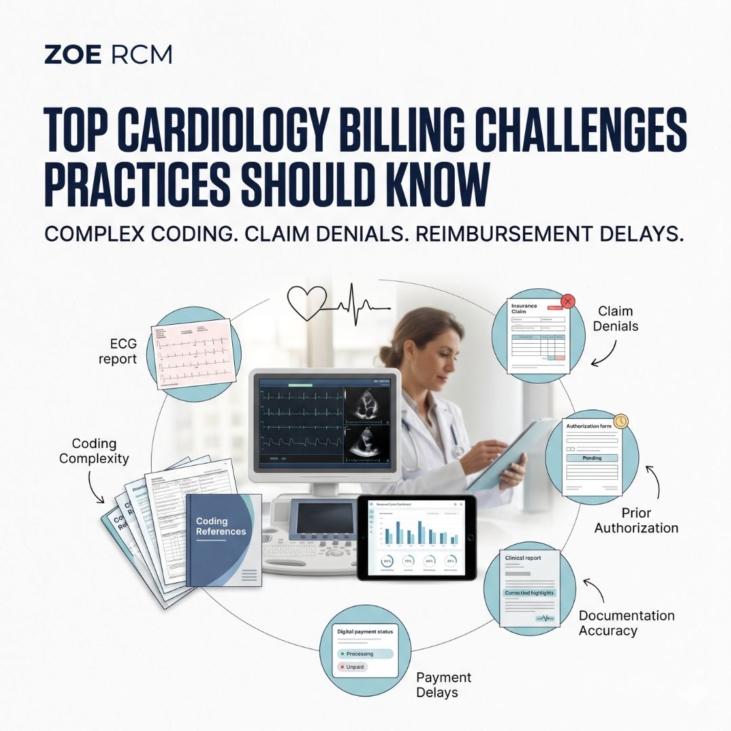
Cardiology billing is a difficult field due to the complexity of the medical procedures, specific coding requirements, insurance policies, and strict documentation standards. Proper reimbursement for services such as ECGs, echocardiograms, cardiac catheterizations and other diagnostic tests depends on accurate coding. Small billing errors can result in claim rejections, delayed payments, and additional administrative costs. By being aware of the most common cardiology billing challenges, healthcare practices can boost their billing accuracy, reduce revenue loss, and maintain a healthy revenue cycle.
Complex Cardiology Medical Coding
Multiple diagnosis and procedure codes are common in cardiology procedures and require close attention. Wrong ICD-10-CM or CPT codes can lead to claim denial, underpayment and reimbursement delay. Cardiac procedures are complex and coding guidelines are specific to each specialty, which is why billing teams need to know them. Accurate medical coding can help practices submit cleaner claims and reduce unnecessary corrections.
Insurance Claim Denials and Rejections
Claim denials are a huge problem for cardiology practices, as each insurance company has different coverage and billing rules. Claims might be denied due to incorrect coding, missing information, issues with eligibility or medical necessity. Repeated denials create more administrative work and delay payment. A structured denial management process helps you to identify recurring problems and improve the accuracy of your claim submission.
Incomplete Medical Documentation
Detailed clinical documentation is crucial for cardiology billing to substantiate diagnoses, procedures, and treatment decisions. Reimbursement may be impacted if test results are missing, if procedure notes are incomplete, or if there is no indication of medical necessity. Healthcare providers are required to document the services rendered in the medical records. Complete documentation allows billing teams to select the appropriate codes and assists with insurance claims.
Prior Authorization and Payer Requirements
Some cardiology procedures and diagnostic services require prior authorization before treatment can be provided. Miss approvals or don’t follow payer specific guidelines and claims may be denied. Insurance requirements can vary based on the procedure and the patient’s coverage. Check for authorization requirements and insurance eligibility prior to delivering services to decrease preventable billing problems.
Delayed Payments and Accounts Receivable
Reimbursement restrictions, payer regulations, and cardiology coding rules are subject to change. Updates to CPT, ICD-10-CM, modifier rules, and relevant coverage policies must be kept up to date by billing teams. Inaccurate claims and compliance issues might result from outdated coding procedures. Cardiology practices can maintain correct billing procedures with the support of routine staff training and coding audits.
How ZOE RCM Can Support Cardiology Billing
Healthcare firms with complicated billing needs can benefit from ZOE RCM’s multispecialty medical coding, claims billing, denial management, payment posting, and accounts receivable services. To handle coding issues, enhance claim processing, and handle unpaid invoices, cardiology offices can investigate these services. Organized revenue cycle procedures and specialist billing support can lessen administrative strain and boost operational effectiveness.
Conclusion
Billing issues in cardiology can have an impact on reimbursement, raise administrative expenses, and interfere with revenue cycle processes. Among the most crucial problems that practices must deal with are complex coding, insurance claim denials, insufficient documentation, prior authorization restrictions, and delayed reimbursements. Cardiology practitioners can lower preventable errors and boost financial performance by enhancing documentation, increasing coding accuracy, and adhering to organized billing procedures.
Looking to improve your cardiology billing efficiency? Connect with ZOE RCM to explore medical billing and revenue cycle management services suited to your practice’s needs.
Frequently Asked Questions (FAQs)
Q1. What are the most common cardiology billing challenges?
The most common cardiology billing challenges include complex medical coding, insurance claim denials, incomplete documentation, prior authorization issues, and delayed reimbursements. These problems can affect billing accuracy and revenue cycle efficiency.
Q2. Why is accurate medical coding important in cardiology billing?
Accurate medical coding helps ensure that cardiac procedures, diagnostic tests, and treatments are correctly reported to insurance providers. It reduces avoidable billing errors, claim denials, and reimbursement delays.
Q3. How can cardiology practices reduce insurance claim denials?
Cardiology practices can reduce claim denials by verifying patient insurance details, maintaining complete medical documentation, using accurate diagnosis and procedure codes, and following payer-specific billing guidelines.
Q4. How does revenue cycle management improve cardiology billing?
Effective revenue cycle management helps cardiology practices streamline claim submissions, monitor outstanding payments, manage denials, and improve financial tracking. This supports smoother billing operations and more consistent cash flow.
Q5. How can ZOE RCM help cardiology practices overcome billing challenges?
ZOE RCM offers multi-specialty medical coding, claims billing, denial management, payment posting, and accounts receivable services. These services can help cardiology practices improve billing workflows, reduce administrative challenges, and manage reimbursements more efficiently.