

Strategies to Improve Emergency Department Cash Flow

Strategies to Improve Emergency Department Cash Flow

While patient care is the primary focus of emergency departments’ fast-paced operations, long-term sustainability also depends on maintaining a strong financial flow. Revenue cycle issues might be brought on by high patient volumes, complicated treatments, insurance issues, and pressing billing needs. Financial performance may be adversely affected by delayed reimbursements, denied claims, and problems with documentation. Emergency departments can enhance payment collection, minimize financial delays, and sustain a steady cash flow by putting into practice efficient revenue cycle tactics. 

Improve Patient Registration Accuracy 

A robust emergency department revenue cycle is built on accurate patient registration. Claim denials and payment delays may arise from inaccurate patient information, missing insurance details, or inadequate demographic data. Establishing effective registration procedures aids in gathering precise data at the start of the patient journey. Increased data accuracy lowers billing errors and increases the likelihood that a claim will be processed successfully.

Strengthen Insurance Verification Processes 

Patients with various health plans and coverage criteria are frequently treated in emergency rooms. Before filing claims, confirming insurance status and benefits might assist spot possible payment problems. A robust verification procedure guaranties precise coverage information, lowers the number of denied claims, and enhances financial transparency. Automated eligibility checks can minimize manual labor and expedite the verification process even more. 

Focus on Accurate Medical Coding 

Precise coding is necessary for a variety of treatments, procedures, and diagnostic services that are part of emergency care. Reduced reimbursements and claim denials may result from incorrect CPT, ICD-10 codes, or modifiers. Billing accuracy is increased by ensuring correct medical coding through qualified specialists and frequent coding reviews. Emergency departments are better able to get paid for the services they perform when proper coding is used.

Reduce Claim Denials Through Proactive Management 

Due to payment delays and more administrative work, claim denials have a direct impact on the cash flow of emergency departments. Inaccurate coding, insufficient paperwork, eligibility issues, and missing permission data are common causes for denial. A proactive denial management approach finds prevalent problems, fixes mistakes, and stops them from happening again. Reducing denials speeds up payments and enhances revenue recovery.

Improve Documentation Quality  

For emergency department reimbursement, accurate and comprehensive documentation is necessary. Medical records must clearly support the services delivered and indicate medical necessity. Payment rejection or claim delays may arise from missing information in patient records. Enhancing documentation procedures lowers compliance-related risks and ensures claims are processed efficiently.

Optimize Accounts Receivable Management 

Maintaining the financial flow of the emergency department depends heavily on efficient accounts receivable administration. Financial stability may be impacted by unpaid claims, postponed insurance payments, and outstanding liabilities. Faster revenue recovery is facilitated by prompt follow-ups, payment tracking, and routine monitoring of outstanding claims. Payment delays are decreased and collections are enhanced via an organized AR management procedure. 

Use Automation and Technology Solutions 

Emergency departments can increase financial performance and streamline revenue cycle processes with the use of technology. Insurance verification, claim tracking, payment posting, denial analysis, and reporting can all be supported by automated systems. Before claims are filed, AI-powered solutions can spot any billing problems. Utilizing technology increases productivity, lowers manual error rates, and improves revenue performance visibility.

Improve Prior Authorization Management 

Certain procedures may require authorization, even though emergency care frequently calls for prompt treatment. Reimbursement issues may arise from delays or missing approvals. Maintaining documentation, keeping track of requirements, and avoiding needless claim difficulties are all made easier with an appropriate permission management procedure. Improved cash flow and more seamless billing processes are supported by better authorization handling. 

Enhance Patient Payment Collection 

Higher out-of-pocket expenses and evolving insurance policies have increased patient responsibility. By offering precise cost estimates, easy payment methods, and transparent billing information, emergency rooms can increase collections. Transparent communication enhances the payment experience and helps patients comprehend their financial obligations. Increased overall revenue is supported by improved patient payment strategies.

Monitor Revenue Cycle Performance Metrics 

Emergency departments can find opportunities for improvement and financial challenges by monitoring important revenue cycle metrics. Days in accounts receivable, reimbursement turnaround time, denial percentages, and claim approval rates are all significant metrics. Regular performance analysis allows organizations to make informed decisions and improve billing efficiency. Data-driven management leads to stronger financial outcomes. 

Conclusion 

Accurate billing procedures, effective claim handling, robust documentation, and cutting-edge technological solutions are all necessary to improve emergency department revenue flow. Emergency departments can attain quicker reimbursements and improved financial stability by lowering denials, increasing coding accuracy, streamlining revenue cycle operations, and optimizing accounts receivable. Healthcare providers can concentrate on their main objective of providing prompt, high-quality emergency care by practicing effective cash flow management. 

Frequently Asked Questions

1. Why is cash flow management important for emergency departments?

Cash flow management helps emergency departments maintain financial stability, manage operational costs, and ensure continuous delivery of quality patient care.

2. What are the main reasons for poor emergency department cash flow?

Common reasons include claim denials, coding errors, delayed reimbursements, incomplete documentation, and insurance verification issues.

3. How can emergency departments reduce claim denials?

Emergency departments can reduce denials through accurate coding, complete documentation, proper eligibility verification, and proactive denial management.

4. How does technology improve emergency department cash flow?

Technology improves cash flow by automating billing processes, tracking claims, identifying errors, and improving revenue cycle efficiency.

5. Can outsourcing RCM improve emergency department revenue?

Yes, specialized RCM services can help emergency departments improve billing accuracy, reduce denials, accelerate reimbursements, and optimize cash flow.
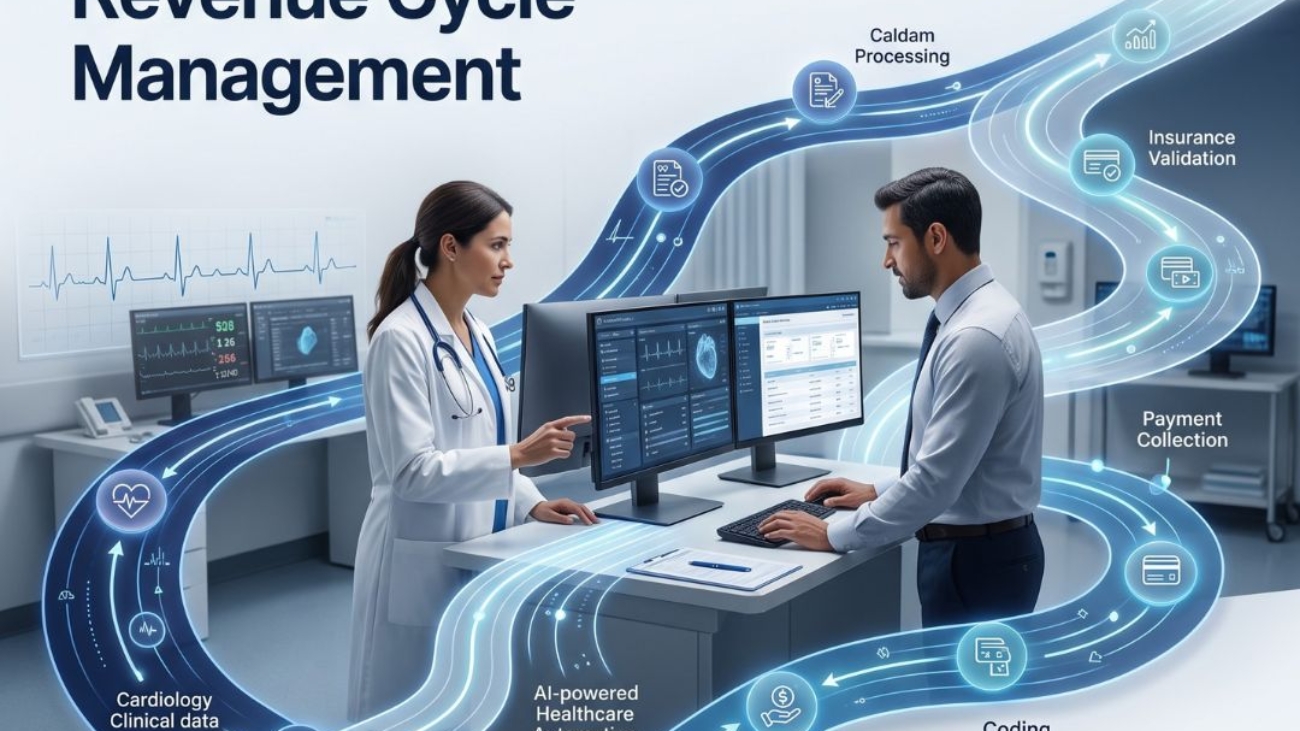

Automated cardiology revenue cycle management system

How Automation Is Transforming Cardiology Revenue Cycle Management

Automation is revolutionizing the revenue cycle management for cardiologists by making the billing operations faster, accurate and efficient. Cardiology practices perform complex procedures like cardiac imaging, catheterization, electrophysiology services, and chronic care management. These procedures require accurate coding and documentation. Manual billing processes are prone to errors, delays in claims and administrative challenges. The automation allows cardiology providers to improve workflows, increase claim accuracy, decrease denials and have a more robust revenue cycle, while giving healthcare teams more time for patient care. 

Automated Medical Coding Improves Billing Accuracy 

Cardiology billing is no different as it requires a thorough knowledge of CPT codes, ICD-10 codes, modifiers, and payer-specific guidelines. Manual coding errors can lead to claim rejection, payment delays or compliance issues. Automated coding solutions analyze clinical documentation and assist in assigning appropriate codes for services provided. This results in better billing accuracy, fewer human errors and ensures cardiology practices are adequately reimbursed for their services.

Automated Claim Processing Speeds Up Reimbursements 

It also assists cardiology practices in improving the claim submission process by reviewing the claims before sending them to insurance providers. The automation systems can highlight missing information, wrong coding details, and even possible errors that may cause rejection. Clean claims submission results in higher approval rates and less reimbursement delays. Faster claims processing means better cash flow and improved financial stability.  

Reducing Cardiology Claim Denials Through Automation 

Denials are one of the biggest challenges in managing the cardiology revenue cycle. Common reasons for denial that can be flagged by automation include coding errors, insufficient documentation, authorization problems and payer-specific rules. Automated denial tracking systems analyze patterns in rejections and provide insights so that future mistakes can be avoided. This enables billing teams to fix issues faster and recoup lost revenue more effectively.

Streamlining Insurance Verification and Eligibility Checks 

Insurance verification is an important step to avoid billing issues. Procedures in cardiology typically involve costly diagnostic tests and treatments, necessitating accurate coverage information. Automated eligibility verification tools quickly verify patient insurance, benefits and coverage requirements. This reduces manual effort, prevents unexpected claims issues and improves the overall patient billing experience.” 

Improving Prior Authorization Management 

Several cardiology procedures require prior authorization before treatment. Manual approval management can cause delays and missed requirements. Automation helps to track authorization requests, to monitor approval status and to ensure required documents are submitted on time. A simpler authorization process reduces procedural delays and claim denials due to missing approvals.

Enhancing Documentation Review 

Cardiology Reimbursement Needs Complete and Accurate Documentation Automation tools can scan through medical records to point out missing information that is needed to support claims. These systems help to ensure proper documentation of diagnosis information, procedure notes and medical necessity requirements. Good documentation leads to better claim acceptance and lesser compliance risks. 

Using Data Analytics for Better Revenue Decisions 

Automation helps advanced analytics deliver critical information to cardiology practices about their revenue cycle. Automated systems can track denial trends, reimbursement patterns, payment timelines and accounts receivable performance. These insights inform practice managers about the challenges they face, improve workflows, and make data-driven decisions. Better visibility into revenue performance supports long-term financial growth.

Reducing Administrative Workload 

Manual billing activities such as claim tracking, payment posting, follow-ups, and reporting require significant time and resources. Automation handles repetitive tasks more efficiently, allowing billing teams to focus on complex issues that need human expertise. Reduced administrative workload improves productivity and helps cardiology practices operate more efficiently. 

Improving Compliance and Security 

Healthcare billing must strictly comply with regulations and data protection standards. Automated RCM systems also help in maintaining accurate records, following billing activities and help in safe data management. Automation reduces manual errors and increases process consistency, enabling cardiology practices to meet compliance and reduce financial risk.

The Future of Automation in Cardiology RCM 

The future of cardiology revenue cycle management will continue to trend toward intelligent automation powered by artificial intelligence, machine learning, and advanced analytics. These technologies will help practices predict claim issues, improve decision-making and create more personalized revenue strategies. As cardiology services grow more complex, automation will increasingly help improve efficiency and financial performance. 

Conclusion 

By increasing accuracy, lowering administrative difficulties, and speeding up reimbursement procedures, automation is transforming cardiology revenue cycle management. Technology makes it easier for cardiology practices to handle complicated billing requirements, from automated coding and claim processing to denial prevention and analytics. Cardiology providers can lower operating costs, increase revenue performance, and concentrate more on providing high-quality patient care by implementing automation solutions. 

Frequently Asked Questions

1. How does automation improve cardiology revenue cycle management?

Automation improves cardiology RCM by streamlining billing processes, reducing errors, improving claim accuracy, and speeding up reimbursements.

2. Can automation reduce cardiology claim denials?

Yes, automation helps identify coding errors, missing documentation, authorization issues, and payer-related problems before claims are submitted.

3. What cardiology billing tasks can be automated?

Tasks such as insurance verification, coding assistance, claim processing, payment tracking, denial analysis, and reporting can be automated.

4. How does automation benefit cardiology billing teams?

Automation reduces repetitive manual tasks, improves productivity, and allows billing teams to focus on complex revenue cycle challenges.

5. Will automation replace medical billing professionals?

Automation will not replace billing professionals but will support them by improving efficiency and allowing them to focus on decision-making and complex billing activities.

AI-powered radiology revenue cycle management system

How AI Is Transforming Radiology Revenue Cycle Management

Artificial intelligence is changing the way the radiology revenue cycle is managed. The technology is making the billing process faster, more accurate and efficient. Radiology practices handle complex diagnostic services such as MRI scans, CT scans, X-rays, ultrasounds, and other imaging procedures that need accurate coding, documentation, and insurance processing. Regular billing practices can be plagued with coding errors, claim denials and slow reimbursements. AI-powered RCM solutions assist radiology providers with automating workflows, increasing claim accuracy, finding billing problems, and improving revenue performance. 

AI-Powered Medical Coding Improves Accuracy 

Radiology billing demands precise coding because each imaging procedure has distinct CPT, ICD-10 and payer requirements. Mistakes in manual coding can lead to claim denials, underpayments and regulatory problems. AI-based coding tools analyze clinical documentation and recommend appropriate codes for the services rendered. This increases coding accuracy, minimizes human error and helps ensure radiology practices are reimbursed properly.

Automated Claim Processing Reduces Delays 

AI allows radiology practices to make claim submission easier. It automatically reviews claims before submitting them to insurance companies. Artificial intelligence systems can flag missing data, wrong codes and potential errors that could lead to rejection. Healthcare providers can improve the quality of their submitted claims, speeding up the processing and avoiding unnecessary delays in payment. 

Improving Denial Management with AI 

The radiology revenue cycle poses a great challenge with the denial of claims. Artificial intelligence (AI) technology can look thru lots of denied claims and find out what the usual reasons for denial are. It can recognize patterns in coding errors, documentation omissions, authorization and payer issues. With these insights, billing teams can proactively prevent problems from occurring and avoid recurring denials.

Better Prior Authorization Management 

Insurance companies often require prior authorization for radiology procedures, especially advanced imaging such as MRI and CT scans. Delays and lack of approval can impact both patient care and revenue collection. AI-powered systems help to monitor authorization requirements, approval status, and possible problems before procedures are performed. This improves the workflow efficiency and reduces claim denials due to authorization issues. 

Enhanced Documentation Review 

Proper documentation is critical for reimbursement in radiology as insurance carriers want documentation of medical necessity. AI tools can scan medical records and determine what’s missing to make the claim successfully submitted. AI offers complete documentation, which significantly reduces the risk of non-compliance and increases the chances of claim approval.

Predictive Analytics for Revenue Optimization 

AI for analytics provides actionable intelligence on revenue cycle performance for radiology practices. These systems are capable of analyzing payment trends, denial patterns, payer behavior and claim turnaround times. Predictive analytics can assist healthcare providers in identifying potential revenue risks and making smart decisions to improve financial performance. 

Automating Administrative Workflows 

Many revenue cycle processes such as eligibility verification, claim status tracking, payment posting and follow-up require significant manual effort. Repetitive tasks are more efficiently handled by AI automation, reducing administrative workload. This allows billing teams to focus on more complex issues requiring human expertise and thereby increases overall productivity.

Improving Patient Financial Experience 

AI also enhances the patient billing experience with faster insurance verification, accurate cost estimates and improved communication. Patients have increased transparency about their financial obligations, pre- and post- service, due to radiology services. Increased transparency will improve patient satisfaction and allow for more effective payment collection. 

Reducing Operational Costs 

AI-powered RCM solutions help radiology practices reduce operational costs by eliminating manual work, avoiding billing errors and increasing workflow efficiency. Automation cuts down on repetitive administrative tasks and increases accuracy. This enables healthcare organizations to better control revenue cycles without adding operational complexity.

Ensuring Compliance and Data Security 

Radiology practices are bound by strict healthcare regulations and must safeguard confidential patient information. AI-driven RCM platforms help maintain compliance by monitoring the billing processes, identifying irregularities and ensuring secure data management. Such systems mitigate compliance risks and ensure accurate and efficient revenue operations. 

Conclusion 

AI is transforming radiology revenue cycle management by improving coding accuracy, automating billing processes, reducing claim denials, and accelerating reimbursements. As radiology services become more complex, AI-powered solutions provide healthcare providers with the tools needed to manage revenue cycles efficiently. By adopting AI technology, radiology practices can reduce administrative challenges, improve financial performance, and focus more on delivering quality patient care.

Frequently Asked Questions

1. How is AI used in radiology revenue cycle management?

AI is used for automated coding, claim review, denial analysis, documentation checks, insurance verification, and revenue cycle analytics.

2. Can AI reduce claim denials in radiology practices?

Yes, AI helps identify coding errors, missing documentation, authorization issues, and other problems before claims are submitted.

3. How does AI improve radiology billing accuracy?

AI analyzes medical documentation and billing data to recommend accurate codes, detect errors, and improve claim quality.

4. What are the benefits of AI-based RCM solutions for radiology practices?

Benefits include faster reimbursements, fewer denials, reduced administrative workload, improved compliance, and better revenue performance.

5. Will AI replace radiology billing professionals?

AI will not completely replace billing professionals. Instead, it supports them by automating repetitive tasks and allowing teams to focus on complex revenue cycle activities.