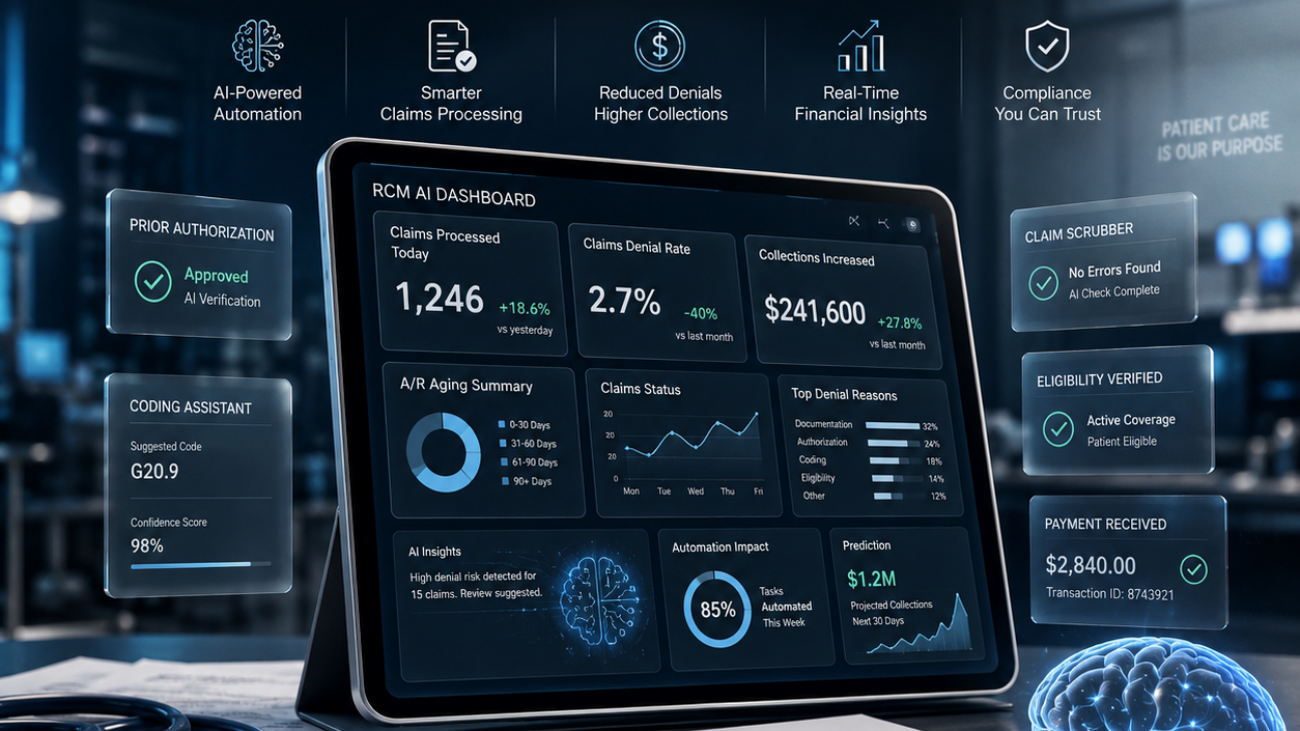
Modern healthcare management system dashboard used by healthcare professionals in a digitally advanced hospital environment.

The Evolution of Healthcare Management Systems

For years, healthcare management systems have seen a huge transformation. The healthcare industry has continuously evolved from managing paper-based patient data to implementing complex digital platforms to improve efficiency, accuracy, and patient care. With increasing patient demands, complex administrative tasks and rising operational costs, healthcare organizations are relying more on modern healthcare management systems to ensure smooth and effective healthcare delivery.

Healthcare management systems today are pivotal in managing patient data, hospital operations, billing processes, appointment scheduling, and interdepartmental communication. The evolution of these systems has led not only to more effective health care but has also changed the entire patient experience. In this blog, we will have a look at the evolution of healthcare management systems and how they continue to impact healthcare operations today. 

The Early Days of Healthcare Management

During the early years of healthcare administration, hospitals and clinics depended on manual paperwork for patient records, billing, and medical documentation. All data was stored physically and working with large amounts of data efficiently was impossible.

This traditional system often led to communication delays, misplaced records, billing errors, and longer patient wait times. Healthcare providers were spending too much time on administrative tasks rather than patient care. However, the expansion of the healthcare industry revealed the shortcomings of manual systems and increased the demand for more structured and effective management solutions. 

The Introduction of Digital Record Systems

The advent of computers heralded the beginning of the digital revolution in health care management. Hospitals began to use simple software systems to put patient records, billing information, and appointment scheduling into digital form.

Electronic Health Records (EHR) and Electronic Medical Records (EMR) are among the most significant developments in the healthcare technology arena. They allowed healthcare providers to access patient information quickly and securely, enhancing communication among doctors, nurses, and administrative staff.

The digital record systems reduced the paper work, made the documentation more accurate and reduced the chances of losing important patient information. “This was a huge improvement for the efficiency of operations and management of patient care.” 

The Rise of Integrated Healthcare Management Systems

Healthcare organizations started implementing integrated healthcare management systems, which consolidated several functions into a single platform, as technology developed. Patient registration, billing, medication administration, laboratory reporting, inventory management, and staff scheduling were all made easier by these technologies.

Workflow coordination across various departments in hospitals and clinics was enhanced via integrated systems. Healthcare practitioners were able to improve overall treatment quality and operational performance by making quicker and more informed decisions because to real-time data availability.

In order to help healthcare providers better monitor performance, patient trends, and operational efficiency, healthcare management systems have also begun to incorporate analytics and reporting tools. 

Cloud-Based Healthcare Management Solutions

Another significant advancement in healthcare management systems was brought forth by cloud technology. Cloud-based solutions improved flexibility and collaboration by enabling healthcare businesses to safely store and retrieve data from any location.

Hospitals and clinics no longer need costly physical servers or complicated IT infrastructure thanks to cloud-based healthcare technologies. Remote, secure access to patient records would enhance communication and care continuity for medical personnel.

Additionally, cloud technology improved system scalability, cybersecurity, and data backup, making healthcare administration more dependable and effective for businesses of all sizes. 

The Impact of Artificial Intelligence and Automation

Healthcare management systems are currently undergoing significant changes due to automation and artificial intelligence (AI). AI-powered solutions enhance clinical decision-making, evaluate patient data, automate administrative activities, and forecast healthcare trends.

Automation has reduced human labor and operational delays by streamlining patient follow-ups, billing, insurance claim processing, and appointment scheduling. Healthcare firms may find inefficiencies, allocate resources more effectively, and improve patient outcomes with the aid of AI-driven data.

Healthcare professionals are using chatbots, virtual assistants, and predictive healthcare systems more frequently to provide quicker and more individualized care. 

Telemedicine and Remote Healthcare Management

Healthcare management systems now have even more capabilities thanks to the expansion of telemedicine. Digital prescriptions, online appointment scheduling, remote patient monitoring, and virtual consultations are all supported by contemporary technologies.

Telemedicine technologies, which enable patients to safely get medical consultations from home, proved particularly crucial during global health emergencies. These days, integrated healthcare management systems are essential for establishing safe online connections between physicians and patients.

Access to healthcare has been enhanced by remote healthcare management, particularly for patients who reside in underserved or rural locations. 

Benefits of Modern Healthcare Management Systems

Both patients and healthcare organizations can benefit greatly from modern healthcare management systems. They eliminate medical errors, increase operational efficiency, cut down on paperwork, and improve patient experiences.

In addition to improving data security and regulatory compliance, healthcare providers may now more efficiently handle appointments, billing, patient information, and communication. Additionally, faster treatments, simpler access to medical information, and better healthcare coordination are advantageous to patients.

Healthcare organizations are able to provide more intelligent, quicker, and patient-centered treatment because to these systems’ ongoing evolution with cutting-edge technologies. 

Conclusion 

The healthcare sector has radically changed as a result of the development of healthcare management systems. Healthcare management systems have greatly increased operational effectiveness, patient care, and healthcare accessibility from manual paperwork to intelligent digital platforms driven by AI and cloud technologies.

Healthcare firms will depend more and more on intelligent management systems to manage intricate operations and satisfy rising patient expectations as technology develops. Innovation, automation, and data-driven decision-making that benefits patients and healthcare providers are key components of the future of healthcare administration. 

FAQs

1. What is a healthcare management system?

A healthcare management system is a digital platform used to manage patient records, billing, appointments, hospital operations, and healthcare workflows.

2. How have healthcare management systems evolved?

They have evolved from paper-based record systems to advanced digital platforms using cloud computing, AI, automation, and telemedicine technologies.

3. What are the benefits of healthcare management systems?

They improve efficiency, reduce errors, enhance patient care, streamline operations, and support better healthcare decision-making.

4. How does AI improve healthcare management systems?

AI helps automate tasks, analyze healthcare data, improve scheduling, support clinical decisions, and enhance operational efficiency.

5. Why are cloud-based healthcare systems important?

Cloud-based systems provide secure remote access to healthcare data, improve collaboration, reduce infrastructure costs, and enhance data security.

Healthcare professional reviewing RCM processes to optimize cash flow

How RCM Services Improve Cash Flow in Healthcare Organizations

Revenue Cycle Management (RCM) is a critical component of healthcare organizations’ financial stability. As the demand for increased efficiency continues to grow, effective cash flow management has become an important concern of healthcare providers. Financial stress on organisations can be caused by delays in payments, claim rejections and billing errors. RCM services are critical to improving cash flow by streamlining the processes of billing, coding, insurance verification, and payment collection. In this blog, we’ll look at how RCM services can help healthcare organizations optimize revenue, reduce errors, and ensure timely payments – ultimately improving the financial stability of the organization. 

Faster Claim Processing and Submission

One of the biggest ways RCM services improve cash flow is by speeding up the claim submission process. RCM providers take care of all billing aspects, including submitting initial claims and following up on unpaid claims. RCM services use specialized automation tools and software to help ensure quick and accurate claims processing. This will not only reduce payment delays, but also improve the efficiency of healthcare operations, enabling practices to get paid sooner. Healthcare organizations can speed up reimbursements and improve cash flow by optimizing the end-to-end billing process. 

Reducing Claim Denials and Rejections

Claim denials are a major hurdle to healthy cash flow for healthcare organizations. But if claims are denied, healthcare providers must spend time resubmitting the claim or appealing the decision. RCM services decrease the chances of denials by ensuring that claims are filed correctly and meet all requirements of the insurance company. Accurate coding, pre-submission checks and regular follow-ups with insurers reduce the chances of claims being rejected. To accelerate denial resolution, increase revenue cycle efficiency and maintain steady cash flow, healthcare organizations need claims to be right the first time. 

Better Billing and Coding Accuracy

Accurate billing and coding is the backbone of a successful revenue cycle. RCM services have highly trained billing and coding professionals to ensure that all medical codes are accurate and up-to-date. This helps prevent errors that can lead to delays or denials for claims. RCM services closely monitor the healthcare organization’s coding process to make sure it is in compliance with insurance and regulatory standards and to avoid errors that can delay reimbursement. The organization is supported by an expert team of coders who not only reduces errors but also ensures that each service is billed correctly to maximize revenue. 

Optimizing Patient Payment Collection

By providing a range of payment choices, including online payment portals, payment plans, and automated reminders, RCM services expedite patient payment collection. Because it necessitates cooperation between the patient and the healthcare provider, collecting payments is sometimes one of the most time-consuming activities in the medical field. RCM services may drastically cut down on the time it takes to collect payments by streamlining the process and making sure patients are aware of their financial obligations. Additionally, flexible payment plans and automated reminders make it easier for patients to handle their payments, increasing collection rates and lowering past-due amounts. RCM services boost the possibility of quicker patient payments by providing a range of payment options. 

Real-Time Analytics and Reporting

Real-time analytics and reporting are another important way that RCM services enhance cash flow. RCM services enable healthcare organisations to promptly detect problems like claim delays, underpayments, and unsettled balances by giving them comprehensive visibility into their revenue cycle performance. Healthcare providers can take preventative action and address problems before they worsen by having access to real-time data. Organisations may monitor important data, such as claim statuses, payment patterns, and denial rates, and make necessary adjustments to enhance the effectiveness of their revenue cycle management with the aid of comprehensive reports. This proactive strategy guarantees that the company’s revenue flow continues continuous and minimises bottlenecks. 

Compliance and Reduced Risk of Audits

In the healthcare industry, regulatory compliance is crucial, and RCM services assist in making sure that businesses follow all relevant billing and coding requirements. Costly audits, fines, and postponed refunds might result from noncompliance. Healthcare firms can maintain compliance with their billing and coding procedures and stay abreast of the most recent legislation by utilizing RCM services. Additionally, RCM services help healthcare firms avoid needless scrutiny by lowering the possibility of billing errors that could lead to audits. In addition to lowering risks, this guarantees efficient claim processing, which improves cash flow even further. 

Conclusion 

For healthcare businesses trying to maximize their cash flow and preserve their financial stability, RCM services are essential. RCM services greatly help the healthcare sector by speeding up claim processing, lowering denials, increasing coding accuracy, and simplifying patient payment collection. Healthcare companies may increase profitability and improve their revenue cycle with real-time analytics, compliance assurance, and risk reduction. Incorporating RCM services will be crucial to maintaining prompt reimbursements and consistent cash flow as healthcare providers continue to adjust to the shifting landscape. 

FAQs

  1. How do RCM services improve cash flow in healthcare organizations?
    RCM services streamline billing and coding, reduce claim denials, enhance payment collection, and ensure timely reimbursements, all of which improve cash flow.
  2. Why is billing accuracy important for RCM?
    Billing accuracy ensures that claims are processed correctly the first time, preventing delays and errors that can negatively impact revenue and cash flow.
  3. How can healthcare organizations reduce claim denials?
    By implementing accurate coding, pre-submission checks, and robust denial management processes, healthcare organizations can reduce claim denials and improve cash flow.
  4. How do RCM services help with patient payments?
    RCM services offer multiple payment options, automated reminders, and flexible payment plans, making it easier for patients to pay their bills on time.
  5. What role do real-time analytics play in RCM?
    Real-time analytics provide healthcare organizations with insights into their revenue cycle performance, enabling them to identify and resolve issues quickly, improving cash flow.
Outsourced AR Management Helps Healthcare Providers

How Outsourced AR Management Helps Healthcare Providers Recover Lost Revenue

In the healthcare industry, even small unpaid balances can quietly grow into major financial challenges. Much like tiny drops of water forming a vast ocean, every unresolved account receivable contributes to revenue leakage that directly impacts an organization’s bottom line.

For hospitals, physician groups, and healthcare providers across the United States, accounts receivable management has become one of the most critical and challenging parts of the revenue cycle. Rising claim denials, payer complexities, staffing shortages, and delayed reimbursements are creating significant pressure on healthcare finances.

While providers continue focusing on patient care, many struggle to maintain consistent cash flow due to mounting AR backlogs and inefficient follow up processes.

Today, effective accounts receivable management is no longer optional. It is essential for financial stability and long term operational success.

Why Accounts Receivable Management Matters More Than Ever

Healthcare organizations depend on timely reimbursements to maintain smooth operations. Every delayed payment affects cash flow, staffing, operational planning, and the ability to invest in better technology and patient care.

Unfortunately, many providers underestimate how much revenue remains trapped in aging receivables.

In many organizations:

• Claims remain unresolved for months
• Denials are not aggressively appealed
• Underpayments go unnoticed
• AR backlogs continue growing
• Staff struggle to keep up with payer follow ups

These issues create a dangerous cycle where earned revenue remains inaccessible, forcing providers to operate under unnecessary financial strain.

In the US healthcare environment, where reimbursement rules continue evolving and payer requirements grow increasingly complex, managing AR efficiently requires expertise, technology, and continuous monitoring.

The Biggest AR Challenges Facing US Healthcare Providers

Healthcare organizations across the country are facing several recurring challenges that significantly affect revenue recovery.

Increasing Claim Denials

One of the biggest financial burdens for providers is the rising volume of denied claims. Even minor coding errors, missing documentation, or payer rule changes can result in claim rejections.

Denied claims often require extensive follow up, corrections, and resubmissions, consuming valuable staff time and delaying reimbursements.

Claims That Are Never Refiled

A surprising number of denied claims are never resubmitted. Internal billing teams may prioritize current claims over older accounts, causing unresolved claims to age beyond timely filing limits.

When this happens, providers permanently lose revenue that was legitimately earned.

Growing AR Backlogs

As workloads increase, internal teams often struggle to keep pace with follow ups and payer communication. Over time, unresolved accounts pile up, creating large AR backlogs that become increasingly difficult to recover.

Without proper analysis, these backlogs continue draining financial performance.

Staffing and Skill Gaps

Modern AR management requires specialized knowledge of payer regulations, denial management, coding guidelines, and reimbursement processes.

Many healthcare organizations face staffing shortages or lack personnel with advanced AR recovery expertise, making it difficult to pursue complex claims effectively.

Reduced Cash Flow

Delayed reimbursements and unresolved receivables directly impact organizational cash flow. This affects day to day operations and limits the ability to invest in growth, technology upgrades, and patient care improvements.

Why Outsourcing AR Management Is Becoming a Strategic Solution

To address these challenges, many healthcare providers in the United States are turning to outsourced AR management partners.

Rather than relying entirely on internal resources, organizations are leveraging specialized revenue cycle experts to improve collections, reduce aging accounts, and recover lost revenue.

Outsourcing AR management provides several important advantages.

Benefits of Outsourcing Accounts Receivable Management

Dedicated Follow Up Teams

Outsourced AR specialists focus exclusively on claim follow ups, denial resolution, and reimbursement recovery. This allows healthcare providers to accelerate collections without overburdening internal staff.

Faster Recovery of Outstanding Revenue

Experienced AR partners use structured workflows and escalation strategies to resolve aging accounts more efficiently, helping organizations recover revenue faster.

Advanced Workflow Technology

Modern outsourcing firms use advanced workflow management systems that provide:

• Real time reporting
• Claim status tracking
• Performance analytics
• Denial trend analysis
• Transparent communication between teams

These tools improve visibility and help providers identify recurring revenue cycle issues.

Root Cause Analysis

Beyond collections, outsourced AR teams analyze why claims are being delayed or denied in the first place. This proactive approach helps healthcare organizations eliminate recurring issues and prevent future backlogs.

Improved Financial Stability

Stronger AR recovery directly improves cash flow, reduces write offs, and strengthens overall financial performance.

For many healthcare providers, outsourcing becomes not just an operational improvement, but a critical financial strategy.

The Importance of Proactive AR Management

In today’s healthcare landscape, waiting until receivables become severely aged is no longer sustainable.

Healthcare leaders must take a proactive approach by:

• Monitoring aging reports regularly
• Identifying denial trends early
• Implementing specialized follow up strategies
• Leveraging technology and analytics
• Partnering with experienced AR recovery experts when needed

Organizations that actively optimize AR performance are better positioned to maintain stable cash flow and navigate growing financial pressures.

Final Thoughts

Healthcare organizations work hard to deliver quality patient care, but revenue that remains unpaid ultimately weakens operational performance and long term growth.

Every unresolved receivable represents money already earned but not yet realized.

As payer complexities continue increasing in the US healthcare system, effective AR management requires more than routine billing operations. It demands specialized expertise, strategic oversight, and consistent follow up.

Outsourcing accounts receivable management can help healthcare providers recover lost revenue, reduce financial strain, and build a healthier revenue cycle process.

In an industry where margins are tighter than ever, protecting every dollar matters.

Frequently Asked Questions (FAQs)

What is accounts receivable management in healthcare?

Accounts receivable management involves tracking, following up, and collecting payments owed to healthcare providers for services rendered to patients.

Why do healthcare claims get denied?

Claims may be denied due to coding errors, missing documentation, eligibility issues, authorization problems, or payer policy changes.

What happens if denied claims are not refiled?

Unresolved claims may exceed payer filing deadlines, resulting in permanent revenue loss for the healthcare provider.

Why are AR backlogs dangerous for healthcare organizations?

Large AR backlogs delay cash flow, increase write offs, reduce financial stability, and make it harder to sustain operational growth.

How does outsourcing AR management help healthcare providers?

Outsourcing provides access to specialized billing professionals, advanced technology, structured follow up processes, and improved recovery strategies.

Can outsourcing improve healthcare cash flow?

Yes. Faster collections and improved denial resolution help healthcare organizations increase available working capital and reduce revenue leakage.

What should healthcare leaders look for in an AR management partner?

Providers should look for industry expertise, transparent reporting, denial management capabilities, advanced technology, and a proven recovery track record.

Is outsourced AR management suitable for small healthcare practices?

Yes. Both large healthcare systems and smaller physician practices can benefit from specialized AR recovery support.