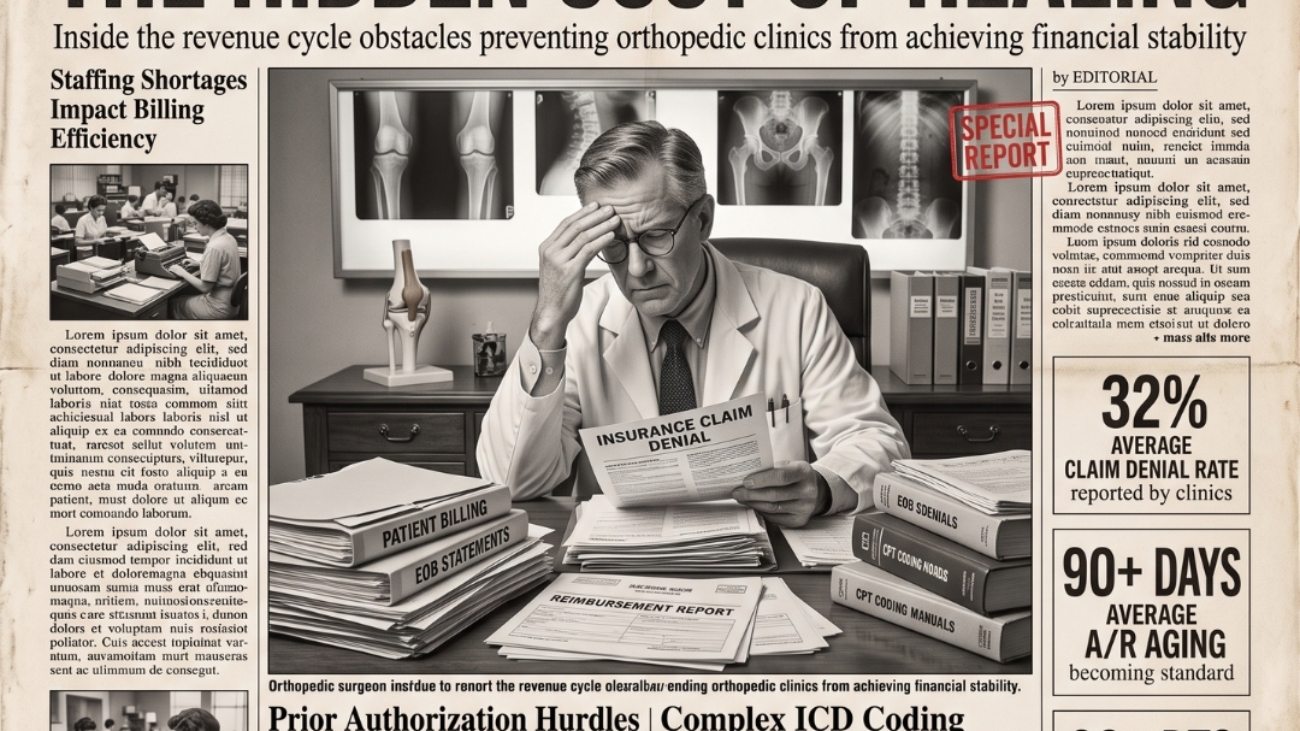

With the help of end-to-end Revenue Cycle Management (RCM) of all the financial process elements, starting from patient registration, insurance verification, coding, and claim submission to payment collection and denial management, orthopedic practices can improve their efficiency. Orthopedic practices often handle complex procedures such as joint replacements, fracture treatments, spine surgeries, rehabilitation services, and diagnostic imaging, making billing more challenging. A specialized RCM approach helps orthopedic providers reduce administrative workload, improve claim accuracy, increase reimbursements, and maintain a smoother financial workflow.
Managing Patient Registration and Insurance Verification
The revenue cycle starts before the patient is treated. If you don’t have the right patient information, insurance information, or eligibility checks, it can lead to problems with billing down the line. End-to-end RCM means that the patient’s demographics, insurance coverage, benefits, and authorization requirements are verified accurately prior to the delivery of services.
For orthopedic practices, where procedures can be costly, early insurance verification helps identify coverage limitations, patient responsibility and the need for authorization. This reduces unexpected billing issues and improves the overall patient experience.
Improving Orthopedic Medical Coding Accuracy
Orthopedic billing involves complex coding requirements as the practices deal with different procedures, surgeries, implants, imaging services and rehabilitation treatments. Claim denials and delayed payments can be caused by incorrect CPT codes, ICD-10 codes, or modifiers.
End-to-end RCM includes the provision of expert orthopedic coding support where trained professionals review medical documentation and assign accurate codes based on procedures performed. Proper coding not only helps orthopedic practices get the proper reimbursement, but also helps them stay compliant with payer guidelines.
Reducing Claim Denials
Claim denials are among the most significant barriers to orthopedic practice revenue. Common reasons are coding errors, incomplete documentation, lack of prior authorization, concerns regarding medical necessity, and payer specific requirements.
A full RCM process is meant to prevent denials before the claims are filed. Teams review denial trends, identify recurring issues, correct errors and handle appeals efficiently. This helps to reduce revenue leakage and improve first pass claim acceptance ratios.
Streamlining Prior Authorization Management
Prior authorization is required for many orthopedic procedures, particularly surgeries, advanced imaging, injections and costly procedures. Mistakes or delays in authorization can cause treatment delays and reimbursement problems.
End-to-end RCM offers orthopedic practices management of authorization workflows, including tracking payer requirements, submitting required documentation, monitoring approval status, and ensuring that approvals are received prior to procedures. This increases operational efficiency and decreases unwarranted claim denials.
Enhancing Charge Capture and Claim Submission
Accurate charge capture provides documentation and billing for all services provided by the orthopedic practice. Missing charges or incorrect entries can mean lost revenue.
End-to-end RCM enables billing teams to review documentation, capture all billable services and submit clean claims within payer deadlines. Improved cash flow. Shorter time to tie up reimbursement. Quicker and more accurate claim submission.
Improving Accounts Receivable Management
Orthopedic practices often have to deal with delayed payments due to claims pending, payer processing and denials that have not been resolved. Poor management of accounts receivable can affect financial stability.
End-to-end RCM covers regular claim follow-up, payment tracking, aging analysis, and payer communication. Proactively managing open balances can help orthopedic practices decrease accounts receivable days and boost revenue collection.
Better Patient Payment Management
Changes in insurance coverage, co-payments and higher deductibles increased responsibility for the patient. Effective management of patient payments is crucial for financial performance.
RCM solutions enable orthopedic practices to deliver accurate billing information, clearly communicate patient responsibilities and provide convenient payment options. This results in better transparency and improves patient satisfaction.
Using Data Analytics for Better Decisions
Report & Analytics: End-to-end RCM offers valuable insights through reports and analytics. Orthopedic practices can keep track of key metrics such as denial rates, reimbursement trends, collection performance, payer performance and claim turnaround time.
These insights help practice leaders to spot operational issues, improve workflows and make data-driven decisions to increase efficiency.
Reducing Administrative Burden on Orthopedic Providers
“Orthopedic physicians and their clinical teams should be focused on patient care, not spending too much time with billing challenges. Bottlenecks such as manual billing processes, claim follow-ups and insurance communications can consume valuable resources.
Orthopedic practices can either outsource or implement a complete RCM solution to reduce administrative workload and allow healthcare professionals to focus on diagnosis, treatment and patient outcomes.
Ensuring Compliance with Healthcare Regulations
Orthopedic billing should comply with healthcare regulations, payer policies, HIPAA regulations, and coding guidelines. Improper billing practices can result in audits, penalties and loss of revenue.
End-to-end RCM services include compliance monitoring, regular code audits and updated payer requirements. This allows orthopedic practices to ensure accurate and ethical billing practices.
Conclusion
End-to-end RCM improves orthopedic practice efficiency by simplifying complicated billing processes, decreasing claim rejections, increasing coding accuracy, and expediting reimbursements. Every step of the revenue cycle from patient registration to the final collection of payments is handled more efficiently.
With dedicated orthopedic RCM support, practices can decrease administrative challenges, improve financial performance, maintain compliance, and concentrate on delivering exceptional patient care.
Frequently Asked Questions
1. What is end-to-end RCM in orthopedic practices?
End-to-end RCM is a complete revenue cycle solution that manages all financial processes, including registration, insurance verification, coding, claims, payments, denials, and reporting.
2. Why do orthopedic practices need specialized RCM services?
Orthopedic practices handle complex procedures, surgeries, implants, and payer requirements that require specialized billing knowledge and accurate coding.
3. How does RCM reduce orthopedic claim denials?
RCM reduces denials by improving documentation review, coding accuracy, authorization management, claim checking, and denial follow-up processes.
4. Can RCM improve orthopedic practice revenue?
Yes, effective RCM improves revenue by reducing billing errors, speeding up reimbursements, recovering unpaid claims, and preventing revenue leakage.
5. How does RCM help orthopedic doctors?
RCM reduces administrative workload, allowing orthopedic providers to spend more time focusing on patient care instead of billing and insurance processes.