
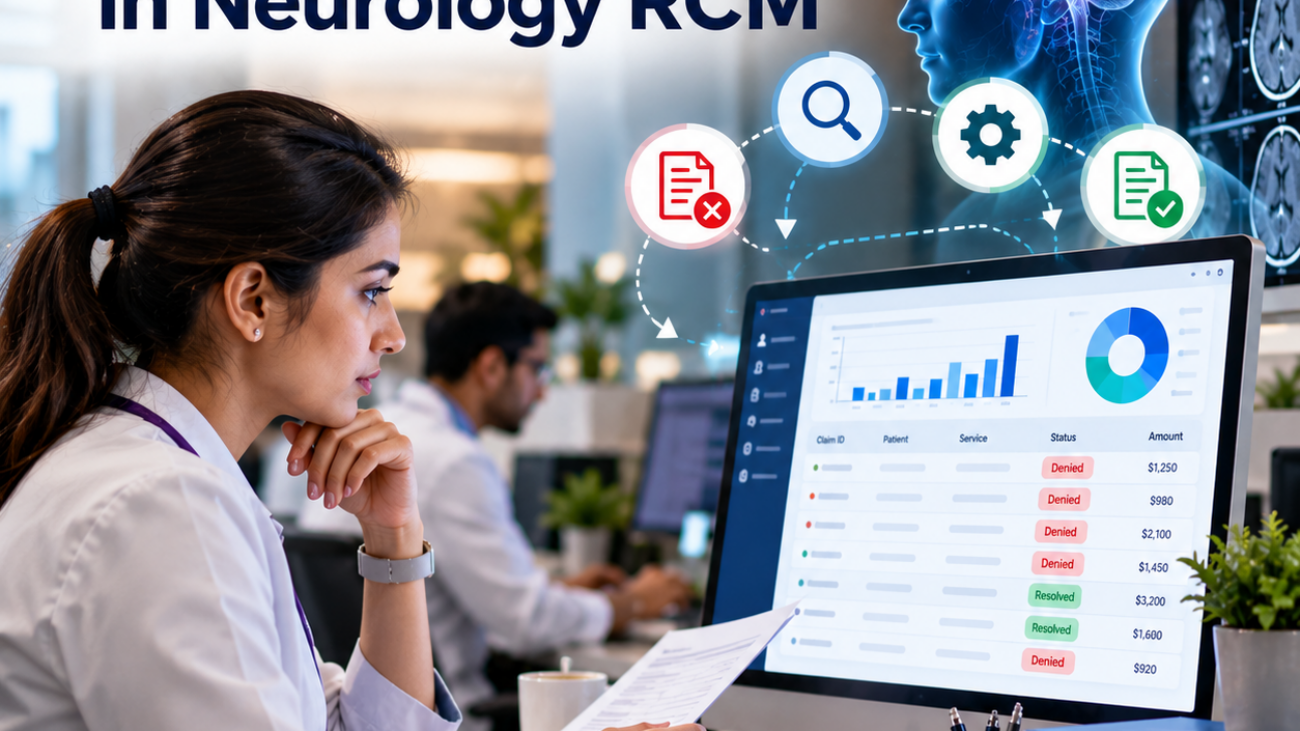
Healthcare billing specialist reviewing neurology insurance claims, medical coding records, denial reports, and reimbursement details on a computer.

The Role of Denial Management in Neurology RCM

Introduction

Denial management is a vital part of neurology revenue cycle management (RCM). It helps to determine the reasons for the denial of insurance claims, rectify billing errors, and aid healthcare providers in recovering eligible payments. Neurology practices often perform complex procedures, diagnostic testing, and ongoing treatments that rely on accurate coding and precise documentation. Small errors in submitting a claim can result in delayed reimbursement and more administrative work. A solid denial management process allows neurology providers to decrease unnecessary denials, boost cash flow, and maintain efficient billing operations. 

Understanding Denial Management in Neurology RCM

Denial management is the process of reviewing denied insurance claims, determining the root cause and taking corrective action. Neurology practices often bill for consultations, diagnostic procedures, neurological testing, and continuing patient care. Different coding and payer requirements can apply to each service. With a structured denial management process, billing teams can overcome these challenges and improve the efficiency of claim processing. 

Identifying Common Neurology Claim Denials

Neurology claims can be denied. Denials may occur due to:Incorrect diagnosis codes, Missing documentation, Insurance eligibility problems, Medical necessity requirements Some procedures such as EEGs (Electroencephalograms), EMG (Electromyography) and nerve conduction studies may require specific documentation and coding. Understanding the reasons for claim denials helps you correct your existing claims and avoid similar problems with future submissions. 

Improving Neurology Medical Coding Accuracy

Accurate medical coding is a must for successful claim processing in neurology. Neurologic conditions and procedures often require specialized ICD-10-CM diagnosis codes and CPT procedure codes. If coding is incorrect or does not match the diagnosis and services provided, reimbursement can be affected. By implementing regular coding reviews and developing specialty-specific knowledge, neurology practices can enhance claim accuracy and minimize avoidable coding-related denials. 

Strengthening Medical Documentation

Incomplete clinical documentation is a frequent cause of claim denials in healthcare billing. A neurologist may need information like patient history, examination details, diagnostic findings and treatment rationale. Missing information hampers insurers’ ability to determine whether a service meets coverage requirements. Having complete and accurate medical records helps support submitted claims and avoid unnecessary delays in reimbursement. 

Managing Prior Authorization Requirements

Prior authorisation from insurance companies may be necessary for some neurological therapies, imaging examinations, and specialised procedures. Even in cases where the therapy is clinically appropriate, claims may be denied if the necessary authorisation is not obtained. Before scheduling services, neurology billing teams should confirm payer requirements and keep the necessary authorisation records. This promotes more efficient claim processing and helps minimise avoidable administrative problems. 

Reducing Repeated Claim Denials

Frequent denials of claims raise administrative expenses and take up important employee time. Neurology clinics can find recurrent issues with coding, paperwork, eligibility, or payer restrictions by reviewing denial patterns. Billing teams can implement corrective actions, including more claim checks or employee training, once these problems are found. Overall revenue cycle efficiency is increased by avoiding recurring mistakes. 

Improving Accounts Receivable Management

The financial performance of neurology clinics may be impacted by denied claims that go unpaid over protracted periods of time. By assisting billing teams in prioritising unresolved claims and completing required follow-ups, effective denial management improves accounts receivable processes. Healthcare organisations can better manage outstanding reimbursements and enhance their financial visibility by keeping an eye on denied claims, appeal dates, and payer answers. 

Using AI and Automation in Denial Management

Healthcare organisations can classify refusal reasons, track claim progress, and detect possible billing problems with the aid of automation and AI-assisted solutions. Additionally, automated workflows can flag claims that need immediate attention and offer follow-up reminders. Nevertheless, skilled billing specialists are still needed to examine evidence and payer requirements for complicated neurology claims. Denial management can be made more structured and effective by combining human knowledge with technology. 

How ZOE RCM Supports Neurology Denial Management

ZOE RCM’s revenue cycle management solutions include rejection management, accounts receivable, claims billing, and multi-specialty medical coding. Healthcare organisations managing complicated billing regulations, such as neurology practices, can benefit from these services. Payment follow-ups, coding assistance, and structured claim reviews can all help cut down on unnecessary billing problems. To choose the right services, neurology providers can talk to ZOE RCM about their unique denial management needs. 

Practical Example: A Neurology Claim Denial

Imagine a neurology clinic where a patient with recurrent seizures has an EEG. The insurance claim is rejected because the payer’s standards for medical necessity are not sufficiently supported by the presented paperwork. The billing team examines the denial, verifies the clinical records, and assesses whether more proof is needed to support a revised claim or appeal. The clinic could lower the number of comparable denials in the future by implementing a documentation review prior to claim submission. Denial management can enhance neurology billing operations, as seen by this example. 

Improving Insurance Claim Appeals

If the treatments were properly recorded and satisfied the payer’s coverage rules, certain rejected neurology claims can be eligible for review or appeal. Reviewing the refusal rationale, obtaining supporting clinical data, and completing the required paperwork by the relevant timeframes are all crucial for a successful appeal process. Healthcare providers can seek legitimate reimbursements with the aid of organised appeal management, which also minimises needless administrative delays. 

Monitoring Denial Management Performance

Neurology practices can identify areas for billing improvement by monitoring denial management performance. Initial rejection rates, denial reasons, appeal results, days in accounts receivable, and the time needed to settle claims are all significant factors. Billing teams might find reoccurring problems and assess remedial strategies by routinely reviewing these metrics. Better operational choices and more effective revenue cycle management are supported by regular monitoring. 

Supporting Long-Term Financial Stability

Neurology practices often provide ongoing care for patients with chronic neurological conditions, making consistent billing and reimbursement important for daily operations. Unresolved claim denials can create financial uncertainty and increase administrative pressure. A proactive denial management process helps healthcare organizations maintain organized claim workflows, improve payment tracking, and reduce preventable revenue delays. This supports more stable financial operations and allows providers to focus on patient care.

Conclusion

Denial management is an essential part of neurology revenue cycle management because it helps healthcare providers address rejected claims, improve coding accuracy, strengthen documentation, and reduce reimbursement delays. Identifying denial patterns and correcting recurring billing issues can improve operational efficiency and support more consistent revenue collection.

ZOE RCM’s denial management, medical coding, claims billing, and accounts receivable services offer healthcare organizations an option for managing complex revenue cycle requirements.

Looking to reduce neurology claim denials and improve reimbursement efficiency? Connect with ZOE RCM to explore denial management and revenue cycle services suited to your healthcare organization’s billing needs

Frequently Asked Questions

Q1. What is denial management in neurology RCM?

Denial management in neurology RCM is the process of identifying, reviewing, correcting, and appealing denied insurance claims related to neurological services. It helps healthcare providers address billing errors and recover eligible reimbursements.

Q2. What are the common reasons for neurology claim denials?

Common reasons include incorrect medical codes, incomplete clinical documentation, missing prior authorization, insurance eligibility problems, and failure to meet payer-specific medical necessity requirements.

Q3. How does denial management improve neurology reimbursement?

Effective denial management helps billing teams identify claim issues, submit appropriate corrections or appeals, and prevent recurring errors. These activities can reduce avoidable reimbursement delays and improve revenue cycle efficiency.

Q4. How can neurology practices reduce insurance claim denials?

Neurology practices can reduce preventable denials by verifying insurance eligibility, checking prior authorization requirements, maintaining complete clinical documentation, reviewing medical codes, and monitoring denial patterns.

Q5. How can ZOE RCM help with neurology denial management?

ZOE RCM provides denial management, multi-specialty medical coding, claims billing, and accounts receivable services. Neurology practices can explore these services to support claim reviews, billing accuracy, payment follow-ups, and overall revenue cycle management.

Medical coding specialist reviewing orthopedic patient records, diagnosis codes, procedure documentation, and insurance claims to improve reimbursement accuracy.

Common Orthopedic Coding Errors That Affect Reimbursement

Introduction

Common orthopedic coding errors impact reimbursement by causing insurance claim denials, delayed payments, incorrect reimbursement amounts, and extra administrative work. Incorrect or missing diagnosis codes, procedure codes, modifiers, laterality, and incomplete medical documentation can stop the billing process. Orthopedic treatments are often complex procedures, so it is important that they are coded accurately for proper claim submission. Healthcare organizations can catch these mistakes early and follow proper coding standards to improve billing accuracy, reduce unnecessary denials and maintain a more efficient revenue cycle. 

Incorrect ICD-10-CM Diagnosis Codes

Improper use of ICD-10-CM diagnosis codes is a common orthopedic billing problem. Common conditions include fractures, joint disorders, and ligament injuries; these often need detailed coding depending on the anatomical location, laterality, and clinical documentation. Problems with claim processing can occur if a non-specific or incorrect diagnosis code is chosen when more specific information is available. Coders review the medical records carefully and choose codes that accurately reflect the patient’s condition. 

Missing or Incorrect Laterality

Many of the codes used to identify orthopedic diagnoses need to specify the side involved, e.g. right knee, left shoulder or right wrist. Missing or incorrect laterality may result in discrepancies in clinical documentation compared to submitted claims. Documenting left knee injury but coding a diagnosis for the right knee may cause claim rejection/denial. Confirming laterality throughout the medical record helps avoid these billable errors. 

Incorrect CPT Procedure Codes

Current Procedural Terminology (CPT) codes are used to identify procedures and services performed by health care providers. Orthopedic treatments like fracture repair, joint injections, arthroscopy and surgical procedures require proper selection of procedure codes. Using an incorrect CPT code may result in underpayment, overpayment or claim denial. Review of operative notes and current coding guidance is recommended for coders to make sure the billed procedure matches the service documented. 

Improper Use of Modifiers

Modifiers add information about medical procedures. They tell you whether a service was distinct, bilateral, or done under certain circumstances. The Effect of Wrong Modifier Use on Insurance Companies Processing Orthopedic Claims. Modifier 59 should only be used when documentation supports a distinct procedural service and applicable coding rules allow its use. “Knowing payer policies and modifier requirements helps avoid unnecessary denial of claims. 

Incomplete Medical Documentation

Accurate orthopedic coding begins with clear and complete clinical documentation. If information is lacking about the injury, the treatment, the surgical procedure or the follow-up care, it can be difficult to assign the correct codes. Fracture coding may require information such as fracture type, anatomical location, encounter, and healing status. Enhanced communication between physicians and coding teams to facilitate proper documentation to support claims. 

Incorrect Fracture Coding

Fracture coding can be especially tricky as ICD-10-CM codes may differentiate between open and closed fractures, displaced and nondisplaced fractures, and different stages of treatment. Mistakes can be made when coders use the wrong encounter character or fail to document fracture details that are required. For instance, an initial visit usually means active treatment, not just the first time the patient is seen. Adhering to current fracture coding guidelines assists in improving accuracy and minimizing reimbursement issues. 

Errors in Surgical Procedure Bundling

Orthopedic surgeries can involve multiple procedures during the same operation. Some services are part of a primary procedure and are not always billed separately. Incorrect coding of bundled procedures could lead to claim denials or reimbursement adjustments. Coding teams review National Correct Coding Initiative (NCCI) edits, CPT guidance and payer specific policies to determine what services can be billed together. 

Incorrect Coding for Follow-Up Visits

Follow up visits are common in orthopedic patients after fractures, surgeries or other treatments. Incorrectly coding these visits can impact reimbursement, particularly for services within a surgical global period. Routine postoperative care might be included in the original procedure payment. Knowing the rules of global surgery and documenting separately reportable services correctly helps you to avoid billing mistakes. 

Failure to Follow Payer-Specific Guidelines

Insurance companies may have different requirements for medical necessity, prior authorization, documentation and claim submittal. Even if a claim is compliant with general coding standards, it can still be denied if it does not meet an applicable payer policy. Orthopedic billing teams need to remain current on applicable insurance requirements and coverage rules. Checking payer updates regularly helps healthcare providers avoid unnecessary reimbursement delays. 

Lack of Regular Coding Audits

Repeated billing problems could go undiscovered if coding reviews are not conducted on a regular basis. Healthcare businesses can find inaccurate codes, missing paperwork, modifier problems, and recurrent rejection patterns with the aid of coding audits. Examining both approved and rejected claims might yield insightful information about coding performance. Over time, orthopedic billing accuracy is strengthened by corrective action, staff training, and routine audits. 

Using AI and Automation to Identify Coding Errors

Healthcare organizations can find typical rejection patterns, missing data, and possible coding errors with the aid of AI-assisted coding solutions. Prior to submission, automated claim checks may also point out discrepancies between diagnosis codes, procedure codes, and modifiers. However, since orthopedic operations frequently call for in-depth clinical interpretation, AI proposals should be examined by trained coding specialists. More dependable billing procedures can be supported by combining technology with skilled programmers. 

How ZOE RCM Supports Orthopedic Medical Coding

Healthcare firms may manage complex billing needs with the help of ZOE RCM’s multispecialty medical coding and revenue cycle management services. Specialized coding knowledge, well-organized claim processing, denial management, and accounts receivable follow-ups can all be advantageous to orthopedic offices. These services can lessen tedious administrative tasks and address avoidable code problems. To find the right help, healthcare providers can speak with ZOE RCM directly about their orthopedic coding needs. 

Practical Example: An Orthopedic Claim Denial

Imagine a patient receiving treatment for a left ankle fracture at an orthopedic facility. The coder unintentionally chooses a diagnosis code that indicates the right ankle while preparing the claim. A denial or a request for correction could arise from the discrepancy between the submitted claim and the clinical documentation. The clinic could avoid such errors by implementing a code review procedure that verifies anatomical location, laterality, and treatment data before to submission. This example demonstrates how minor coding mistakes might result in needless delays in compensation. 

Improving Orthopedic Coding Accuracy

Consistent documentation, up-to-date coding expertise, and efficient communication between billing teams and healthcare providers are all necessary to improve orthopedic coding accuracy. ICD-10-CM changes, CPT guidelines, modifier rules, and payer requirements should all be routinely reviewed by coding professionals. Coding audits and claim validation procedures can also be advantageous to healthcare businesses. These procedures facilitate more effective reimbursement, enhance claim quality, and lower avoidable errors. 

Conclusion

Orthopedic coding errors can significantly affect healthcare reimbursement by creating claim denials, payment delays, and additional administrative responsibilities. Common mistakes involving diagnosis codes, CPT codes, modifiers, fracture coding, and incomplete documentation can disrupt the revenue cycle.

Accurate medical coding, regular audits, and proper claim reviews help healthcare providers reduce these challenges and improve billing efficiency. ZOE RCM’s multi-specialty medical coding and revenue cycle management services offer healthcare organizations an option for managing complex billing requirements.

Looking to reduce orthopedic coding errors and improve reimbursement efficiency? Connect with ZOE RCM to explore medical coding and revenue cycle management services suited to your healthcare organization’s needs.

Frequently Asked Questions

Q1. What are the most common orthopedic coding errors?

Common orthopedic coding errors include incorrect ICD-10-CM diagnosis codes, missing laterality, inaccurate CPT codes, improper modifier usage, incomplete medical documentation, and incorrect fracture encounter coding.

Q2. How do orthopedic coding errors affect reimbursement?

Orthopedic coding errors can cause insurance claim denials, delayed payments, underpayments, overpayments, and additional administrative work. Accurate coding helps reduce these problems and supports more efficient claim processing.

Q3. Why is fracture coding important in orthopedic billing?

Fracture coding often requires detailed information about the injury location, fracture type, laterality, treatment stage, and healing status. Incorrect or incomplete coding can affect claim accuracy and reimbursement.

Q4. How can healthcare providers reduce orthopedic claim denials?

Healthcare providers can reduce preventable denials by maintaining complete documentation, verifying diagnosis and procedure codes, reviewing modifier requirements, following payer policies, and conducting regular coding audits.

Q5. How can ZOE RCM help with orthopedic medical coding?

ZOE RCM provides multi-specialty medical coding and revenue cycle management services. Orthopedic healthcare providers can explore these services for coding support, claims processing, denial management, and billing workflow improvement.

Multi-Specialty Medical Coding for Efficient Healthcare Billing

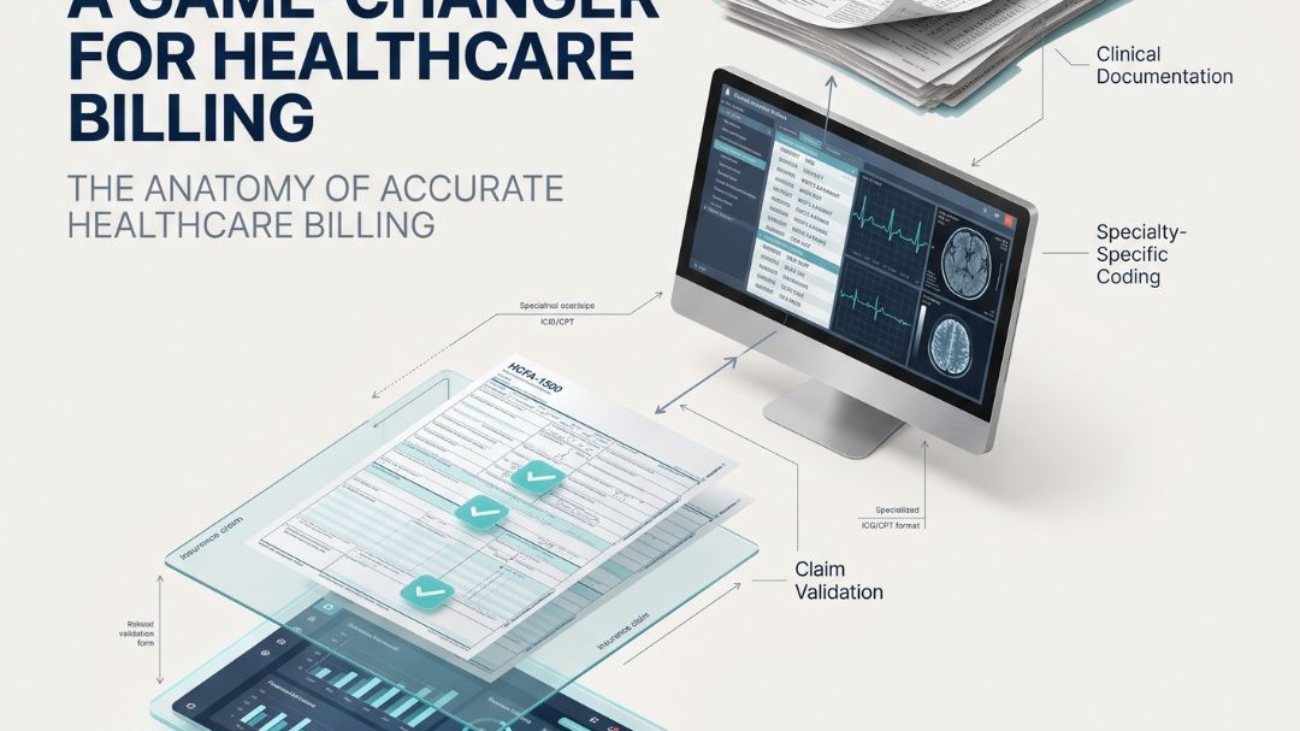
Multi-Specialty Medical Coding: A Game-Changer for Healthcare Billing

Multi-specialty medical coding is a paradigm shift in healthcare billing, helping hospitals, clinics and medical practices manage the different coding requirements accurately and efficiently. Different medical specialties have different documentation and coding guidelines, which increases the complexity for healthcare organizations that have multiple services that are billed. Specialized coding support helps to reduce preventable errors and improves accuracy of insurance claims and delays in reimbursement. Experienced coding professionals and structured workflows can help healthcare providers streamline their billing operations and enhance their revenue cycle management. 

Understanding Multi-Specialty Medical Coding

Multi-specialty medical coding involves applying standard medical codes to diagnoses, procedures, and healthcare services in different medical specialties. These codes are used for insurance claims, billing and health care documentation. Different specialties have their own coding requirements . For example, cardiology, orthopedics, dermatology, radiology. Professionals trained in this field should know the applicable guidelines . Correct coding is the key to accurately representing healthcare services in the billing process. 

Improving Medical Billing Accuracy

One of the biggest advantages of multi-specialty medical coding is billing accuracy. Incorrect diagnosis or procedure codes can lead to rejected claims, delayed payments, and additional administrative work. Medical coders review clinical documentation and specialize and apply proper coding guidelines to facilitate accurate claim preparation. This cuts down on avoidable errors and helps healthcare organizations keep more dependable billing records. 

Reducing Insurance Claim Denials

Denials of insurance claims are a frequent problem for medical professionals who oversee several specialities. Inaccurate coding, missing paperwork, or inconsistent medical information may result in the denial of claims. Before claims are filed, coding-related problems can be found with the aid of multispecialty coding knowledge. Healthcare organisations can cut down on avoidable denials and the time required to amend rejected claims by increasing coding accuracy and documentation reviews. 

Managing Complex Coding Requirements

Knowledge of particular procedures, therapies, and coding guidelines is necessary for many medical specialities. An orthopaedic claim might include surgery or fracture treatment, whereas a cardiology claim might comprise cardiovascular operations and diagnostic testing. Medical coding experts with many specialities are aware of these variations and use pertinent coding guidelines. This enables healthcare organisations to handle intricate billing requirements without depending on a single standard coding method. 

Improving Revenue Cycle Management

Because it links clinical documentation with insurance billing, medical coding is crucial to the revenue cycle. Errors in coding can impede the processing of claims and cause reimbursement delays. Cleaner claim submissions, fewer unnecessary revisions, and better-organized financial operations are all supported by accurate multi-specialty coding. It can assist healthcare providers in increasing overall revenue cycle efficiency when paired with claims management and payment follow-ups. 

Reducing Administrative Workload

Internal billing teams may be under a lot of strain to manage coding requirements across multiple medical departments. Employees may have to spend more time going over paperwork, fixing coding errors, and answering insurance-related questions. More efficient distribution of these duties is made possible by specialised medical coding assistance. As a result, healthcare organisations can cut down on tedious administrative tasks and free up more time for their staff to concentrate on crucial operational tasks. 

Supporting Different Healthcare Specialties

Cardiology, neurology, orthopaedics, dermatology, and general medicine are just a few of the disciplines that hospitals and multispecialty clinics frequently offer services throughout. Different documentation standards and coding expertise may be needed by each department. Through specialised knowledge, multi-specialty medical coding services assist organisations in managing these differences. This is especially helpful for expanding medical practices that deal with a variety of patient procedures and treatments. 

Using AI and Automation in Medical Coding

Automation and artificial intelligence are becoming more and more helpful in healthcare coding processes. AI-assisted technologies can point out potential coding discrepancies for review, discover missing documentation, and recommend potential codes. Additionally, workflow management and routine validation can be supported by automation. Nonetheless, skilled medical coders are still necessary for evaluating complicated cases, verifying coding accuracy, and upholding adherence to relevant regulations. 

How ZOE RCM Supports Multi-Specialty Medical Coding

ZOE RCM’s healthcare revenue cycle management services include multispecialty medical coding. Its coding support aims to enhance billing processes and assist healthcare companies in managing various specialist requirements. Specialized coding can facilitate a more structured revenue cycle when combined with rejection management, payment posting services, and claims billing. These services can be assessed by healthcare providers based on their operating requirements, specializations, and coding volume. 

Real-Life Example: Medical Coding in a Multi-Specialty Clinic

Think about a multispecialty clinic that provides orthopedic, dermatological, and cardiac services. Because each specialty has separate criteria, its billing team often has to make coding modifications while processing claims from all three departments. The clinic could find mistakes earlier and cut down on needless claim resubmissions by implementing a systematic documentation review process and hiring coding experts with specialized training. This example shows how multi-specialty coding can facilitate more effective reimbursement workflows and streamline billing operations. 

Improving Healthcare Billing Compliance

Medical coding must adhere to healthcare rules, payer criteria, and appropriate coding standards. Inaccurate coding might raise compliance risks and lead to reimbursement issues. Healthcare businesses can maintain uniform documentation processes and apply pertinent coding principles with the assistance of multispecialty coding professionals. Maintaining current code sets and billing standards also requires regular coding reviews and continuous training. 

Supporting Long-Term Healthcare Business Growth

Medical coding gets more complicated as healthcare companies grow. There are more coding and billing obligations when new specialties, providers, or treatment methods are added. Support for multispecialty medical coding can assist businesses in handling these transitions without unduly taxing current teams. Scalable coding enhances operational effectiveness and gets healthcare companies ready for rising claim volumes. 

Conclusion

Multi-specialty medical coding plays an important role in making healthcare billing more accurate, organized, and efficient. By addressing specialty-specific coding requirements, healthcare providers can reduce preventable claim denials, simplify administrative work, and improve revenue cycle management.

ZOE RCM’s multi-specialty medical coding services offer healthcare organizations an option for managing complex coding requirements alongside other revenue cycle activities.

Frequently Asked Questions

Q1. What is multi-specialty medical coding?

Multi-specialty medical coding is the process of assigning standardized diagnosis and procedure codes to healthcare services across different medical specialties. It helps healthcare providers prepare accurate insurance claims and maintain organized billing records.

Q2. Why is multi-specialty medical coding important for healthcare billing?

Multi-specialty medical coding helps healthcare organizations manage different coding requirements, reduce preventable billing errors, improve claim accuracy, and support efficient reimbursement processes.

Q3. How does multi-specialty medical coding reduce claim denials?

Specialty-trained medical coders can identify incorrect codes, documentation gaps, and coding inconsistencies before claims are submitted. This helps reduce denials caused by avoidable coding errors.

Q4. Does ZOE RCM provide multi-specialty medical coding services?

Yes. ZOE RCM lists multi-specialty medical coding among its revenue cycle management services, supporting healthcare organizations with different medical coding requirements.

Q5. Can AI replace medical coders in multi-specialty healthcare billing?

AI can assist with code suggestions, documentation checks, and identifying potential errors. However, trained medical coders remain important for interpreting complex clinical records, reviewing coding decisions, and ensuring compliance with coding guidelines.