Introduction
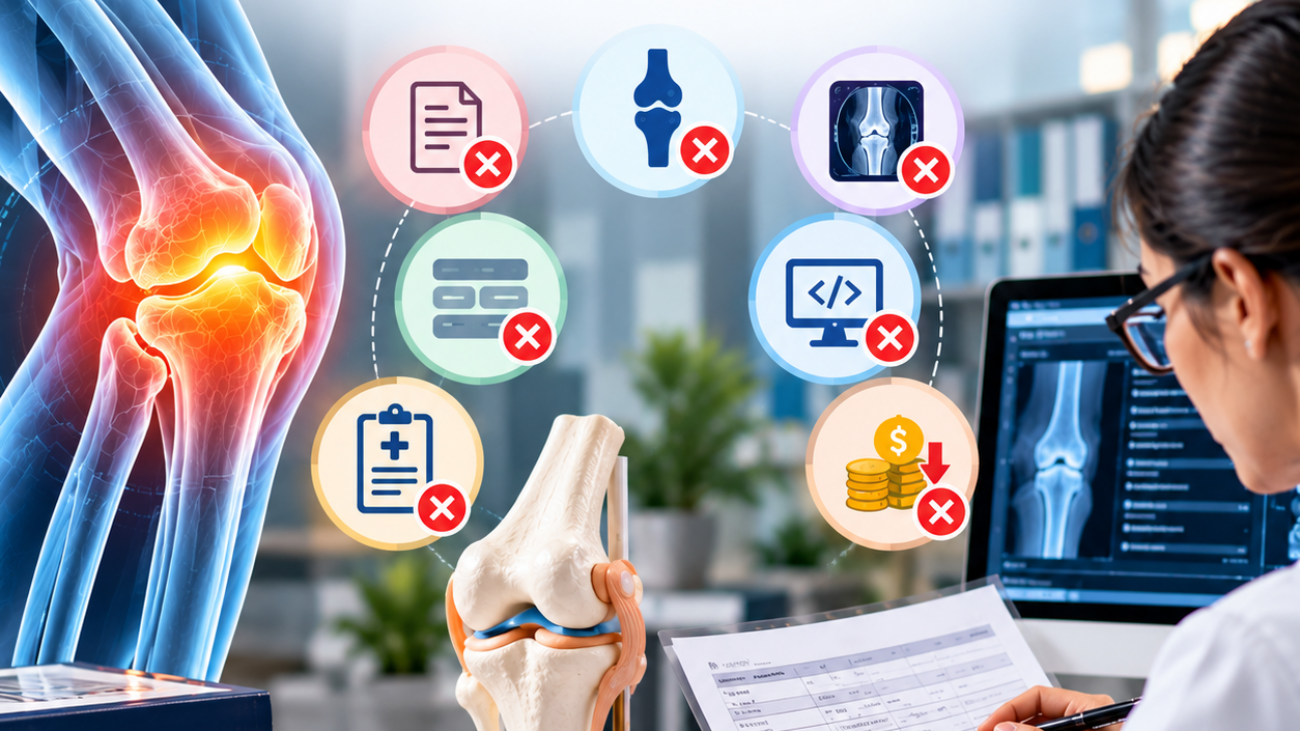
Common orthopedic coding errors impact reimbursement by causing insurance claim denials, delayed payments, incorrect reimbursement amounts, and extra administrative work. Incorrect or missing diagnosis codes, procedure codes, modifiers, laterality, and incomplete medical documentation can stop the billing process. Orthopedic treatments are often complex procedures, so it is important that they are coded accurately for proper claim submission. Healthcare organizations can catch these mistakes early and follow proper coding standards to improve billing accuracy, reduce unnecessary denials and maintain a more efficient revenue cycle.
Incorrect ICD-10-CM Diagnosis Codes
Improper use of ICD-10-CM diagnosis codes is a common orthopedic billing problem. Common conditions include fractures, joint disorders, and ligament injuries; these often need detailed coding depending on the anatomical location, laterality, and clinical documentation. Problems with claim processing can occur if a non-specific or incorrect diagnosis code is chosen when more specific information is available. Coders review the medical records carefully and choose codes that accurately reflect the patient’s condition.
Missing or Incorrect Laterality
Many of the codes used to identify orthopedic diagnoses need to specify the side involved, e.g. right knee, left shoulder or right wrist. Missing or incorrect laterality may result in discrepancies in clinical documentation compared to submitted claims. Documenting left knee injury but coding a diagnosis for the right knee may cause claim rejection/denial. Confirming laterality throughout the medical record helps avoid these billable errors.
Incorrect CPT Procedure Codes
Current Procedural Terminology (CPT) codes are used to identify procedures and services performed by health care providers. Orthopedic treatments like fracture repair, joint injections, arthroscopy and surgical procedures require proper selection of procedure codes. Using an incorrect CPT code may result in underpayment, overpayment or claim denial. Review of operative notes and current coding guidance is recommended for coders to make sure the billed procedure matches the service documented.
Improper Use of Modifiers
Modifiers add information about medical procedures. They tell you whether a service was distinct, bilateral, or done under certain circumstances. The Effect of Wrong Modifier Use on Insurance Companies Processing Orthopedic Claims. Modifier 59 should only be used when documentation supports a distinct procedural service and applicable coding rules allow its use. “Knowing payer policies and modifier requirements helps avoid unnecessary denial of claims.
Incomplete Medical Documentation
Accurate orthopedic coding begins with clear and complete clinical documentation. If information is lacking about the injury, the treatment, the surgical procedure or the follow-up care, it can be difficult to assign the correct codes. Fracture coding may require information such as fracture type, anatomical location, encounter, and healing status. Enhanced communication between physicians and coding teams to facilitate proper documentation to support claims.
Incorrect Fracture Coding
Fracture coding can be especially tricky as ICD-10-CM codes may differentiate between open and closed fractures, displaced and nondisplaced fractures, and different stages of treatment. Mistakes can be made when coders use the wrong encounter character or fail to document fracture details that are required. For instance, an initial visit usually means active treatment, not just the first time the patient is seen. Adhering to current fracture coding guidelines assists in improving accuracy and minimizing reimbursement issues.
Errors in Surgical Procedure Bundling
Orthopedic surgeries can involve multiple procedures during the same operation. Some services are part of a primary procedure and are not always billed separately. Incorrect coding of bundled procedures could lead to claim denials or reimbursement adjustments. Coding teams review National Correct Coding Initiative (NCCI) edits, CPT guidance and payer specific policies to determine what services can be billed together.
Incorrect Coding for Follow-Up Visits
Follow up visits are common in orthopedic patients after fractures, surgeries or other treatments. Incorrectly coding these visits can impact reimbursement, particularly for services within a surgical global period. Routine postoperative care might be included in the original procedure payment. Knowing the rules of global surgery and documenting separately reportable services correctly helps you to avoid billing mistakes.
Failure to Follow Payer-Specific Guidelines
Insurance companies may have different requirements for medical necessity, prior authorization, documentation and claim submittal. Even if a claim is compliant with general coding standards, it can still be denied if it does not meet an applicable payer policy. Orthopedic billing teams need to remain current on applicable insurance requirements and coverage rules. Checking payer updates regularly helps healthcare providers avoid unnecessary reimbursement delays.
Lack of Regular Coding Audits
Repeated billing problems could go undiscovered if coding reviews are not conducted on a regular basis. Healthcare businesses can find inaccurate codes, missing paperwork, modifier problems, and recurrent rejection patterns with the aid of coding audits. Examining both approved and rejected claims might yield insightful information about coding performance. Over time, orthopedic billing accuracy is strengthened by corrective action, staff training, and routine audits.
Using AI and Automation to Identify Coding Errors
Healthcare organizations can find typical rejection patterns, missing data, and possible coding errors with the aid of AI-assisted coding solutions. Prior to submission, automated claim checks may also point out discrepancies between diagnosis codes, procedure codes, and modifiers. However, since orthopedic operations frequently call for in-depth clinical interpretation, AI proposals should be examined by trained coding specialists. More dependable billing procedures can be supported by combining technology with skilled programmers.
How ZOE RCM Supports Orthopedic Medical Coding
Healthcare firms may manage complex billing needs with the help of ZOE RCM’s multispecialty medical coding and revenue cycle management services. Specialized coding knowledge, well-organized claim processing, denial management, and accounts receivable follow-ups can all be advantageous to orthopedic offices. These services can lessen tedious administrative tasks and address avoidable code problems. To find the right help, healthcare providers can speak with ZOE RCM directly about their orthopedic coding needs.
Practical Example: An Orthopedic Claim Denial
Imagine a patient receiving treatment for a left ankle fracture at an orthopedic facility. The coder unintentionally chooses a diagnosis code that indicates the right ankle while preparing the claim. A denial or a request for correction could arise from the discrepancy between the submitted claim and the clinical documentation. The clinic could avoid such errors by implementing a code review procedure that verifies anatomical location, laterality, and treatment data before to submission. This example demonstrates how minor coding mistakes might result in needless delays in compensation.
Improving Orthopedic Coding Accuracy
Consistent documentation, up-to-date coding expertise, and efficient communication between billing teams and healthcare providers are all necessary to improve orthopedic coding accuracy. ICD-10-CM changes, CPT guidelines, modifier rules, and payer requirements should all be routinely reviewed by coding professionals. Coding audits and claim validation procedures can also be advantageous to healthcare businesses. These procedures facilitate more effective reimbursement, enhance claim quality, and lower avoidable errors.
Conclusion
Orthopedic coding errors can significantly affect healthcare reimbursement by creating claim denials, payment delays, and additional administrative responsibilities. Common mistakes involving diagnosis codes, CPT codes, modifiers, fracture coding, and incomplete documentation can disrupt the revenue cycle.
Accurate medical coding, regular audits, and proper claim reviews help healthcare providers reduce these challenges and improve billing efficiency. ZOE RCM’s multi-specialty medical coding and revenue cycle management services offer healthcare organizations an option for managing complex billing requirements.
Looking to reduce orthopedic coding errors and improve reimbursement efficiency? Connect with ZOE RCM to explore medical coding and revenue cycle management services suited to your healthcare organization’s needs.
Frequently Asked Questions
Q1. What are the most common orthopedic coding errors?
Common orthopedic coding errors include incorrect ICD-10-CM diagnosis codes, missing laterality, inaccurate CPT codes, improper modifier usage, incomplete medical documentation, and incorrect fracture encounter coding.
Q2. How do orthopedic coding errors affect reimbursement?
Orthopedic coding errors can cause insurance claim denials, delayed payments, underpayments, overpayments, and additional administrative work. Accurate coding helps reduce these problems and supports more efficient claim processing.
Q3. Why is fracture coding important in orthopedic billing?
Fracture coding often requires detailed information about the injury location, fracture type, laterality, treatment stage, and healing status. Incorrect or incomplete coding can affect claim accuracy and reimbursement.
Q4. How can healthcare providers reduce orthopedic claim denials?
Healthcare providers can reduce preventable denials by maintaining complete documentation, verifying diagnosis and procedure codes, reviewing modifier requirements, following payer policies, and conducting regular coding audits.
Q5. How can ZOE RCM help with orthopedic medical coding?
ZOE RCM provides multi-specialty medical coding and revenue cycle management services. Orthopedic healthcare providers can explore these services for coding support, claims processing, denial management, and billing workflow improvement.