
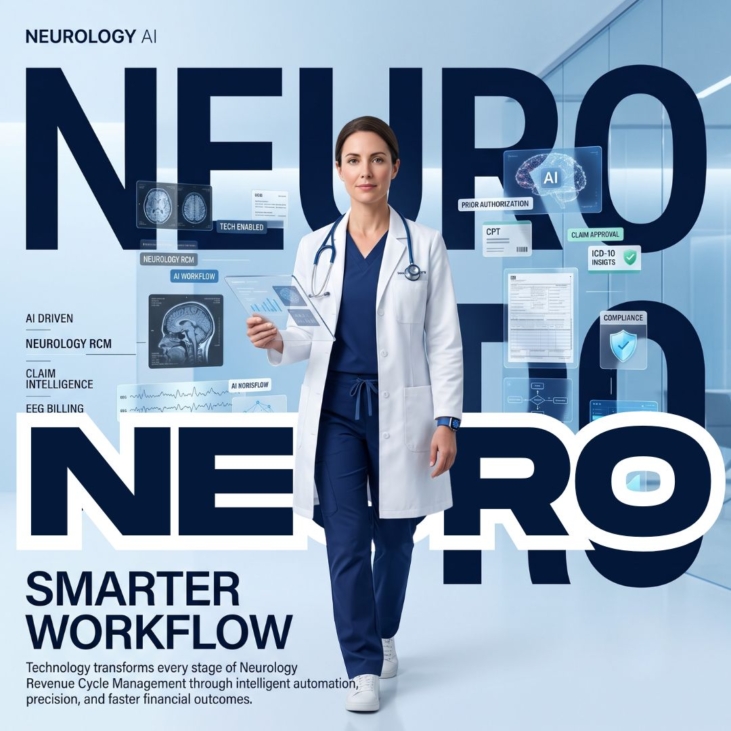
Technology is improving neurology revenue cycle management by making the billing processes faster, more accurate and more efficient. Neurology practices offer complex services such as neurological assessments, imaging, procedures, therapy management and treatment of chronic conditions that require detailed documentation and precise coding. Traditional manual billing processes are often prone to errors, delay claims, and create administrative headaches. Neurology practices use tools such as artificial intelligence, automation, electronic health records and data analytics to improve claim accuracy, reduce denials, speed up reimbursements and maintain better financial performance.
Automated Medical Coding Improves Accuracy
The complexity of neurology billing is driven by complicated coding requirements since services typically encompass evaluations, diagnostic tests, procedures, and specialized treatments. Technology-enabled coding solutions help identify the appropriate codes from the clinical documentation while reducing manual errors. Automated coding tools help billing teams improve accuracy, maintain compliance, and reduce the likelihood of claim errors. This allows neurology practices to receive proper reimbursement for the services they provide.
AI-Powered Claim Processing Reduces Errors
Artificial intelligence is helping healthcare organizations identify potential billing issues before claims are submitted. AI-based systems can review claim information, detect missing details, identify coding inconsistencies, and highlight possible denial risks. For neurology practices, this helps prevent common billing problems related to documentation gaps, incorrect modifiers, and payer requirements. Cleaner claims improve first-pass acceptance rates and reduce payment delays.
Improved Denial Management Through Technology
Denials of claims are a big challenge in revenue cycle management in neurology. Technology also aids in the study of denial patterns and the causes of rejected claims. Automated systems can categorize denials as coding errors, authorization issues, eligibility issues or payer rules. These insights help billing teams to correct and avoid making the same mistakes again. Better denial management improves revenue recovery and reduces administrative workload.
Electronic Health Records Improve Documentation
Electronic Health Record (EHR) systems play an important role in improving neurology billing efficiency. They allow healthcare providers to maintain accurate patient records, procedure details, diagnosis information, and treatment history. Better documentation supports accurate coding and helps demonstrate medical necessity during claim reviews. Integration between EHR and billing systems creates a smoother workflow from patient care to reimbursement.
Automated Insurance Verification and Eligibility Checks
Verifying insurance is an important process to avoid claim rejection. With technology, neurology practices can automatically verify patient eligibility, insurance coverage, benefits and authorization requirements prior to treatment. It minimizes errors due to old insurance information and helps in early identification of patient responsibilities. Automation of verification increases the quality of the patient experience and lowers billing issues.
Enhanced Compliance and Security
Revenue cycle analytics offer valuable insight into the financial performance of Neurology practices. Technology platforms can also measure important metrics such as claim approval rates, denial trends, reimbursement turnaround times and accounts receivable performance. These insights help practice managers to see workflow issues and make informed decisions. Data-driven strategies improve transparency into revenue and ensure sustainable long-term financial growth.
Faster Payments and Better Cash Flow
Technology speeds up payment cycles through faster claim submission, fewer errors, and better follow-up. Automated workflows assist with identifying unpaid claims, tracking payment status, and managing outstanding balances more effectively. Better cash flow with quicker reimbursements provides neurology practices with improved financial stability.
Conclusion
Technology is transforming the way neurology revenue cycle management is performed, with gains in accuracy, automation, compliance, and financial performance. Neurology practices face complex billing challenges that can be overcome with AI-powered coding, automated claim processing, electronic health records, analytics and workflow automation. Neurology providers that embrace advanced RCM technology can alleviate administrative burden, enhance reimbursements and spend more time on delivering quality patient care.
Frequently Asked Questions
1. How does technology improve neurology revenue cycle management?
Technology improves neurology RCM by automating billing processes, improving coding accuracy, reducing claim denials, and speeding up reimbursements.
2. How is AI used in neurology medical billing?
AI helps review claims, identify errors, analyze denial risks, improve coding accuracy, and automate repetitive billing tasks.
3. Can technology reduce claim denials in neurology practices?
Yes, technology helps reduce denials by identifying coding errors, missing documentation, authorization issues, and payer-related problems before claim submission.
4. Why is automation important in neurology billing?
Automation reduces manual workload, improves processing speed, minimizes errors, and allows billing teams to focus on complex revenue cycle tasks.
5. What are the benefits of using RCM technology for neurology practices?
RCM technology helps improve revenue accuracy, increase reimbursements, reduce administrative costs, maintain compliance, and enhance overall practice efficiency.