
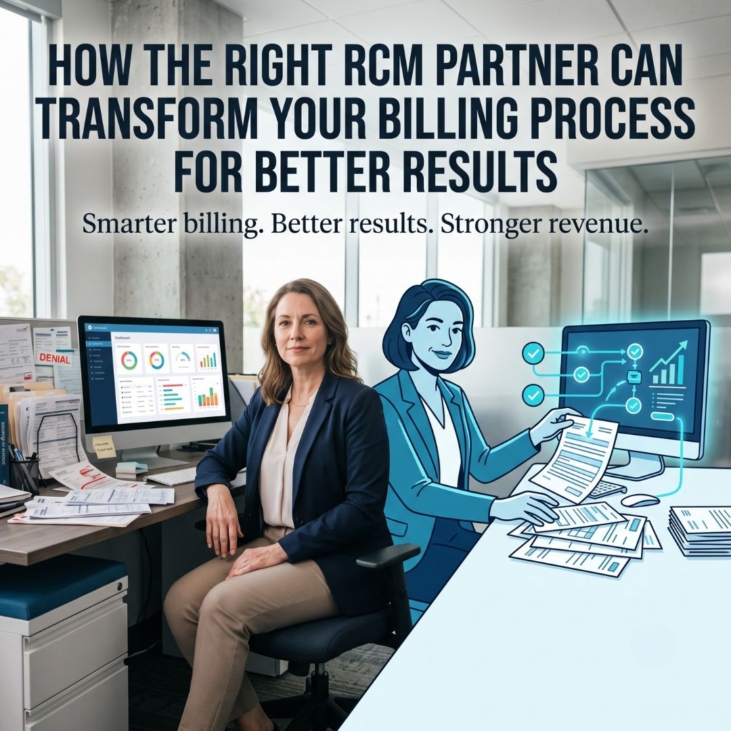
Healthcare billing is a complicated process that involves several interrelated steps. These steps include patient registration and insurance verification, medical coding, claim submission, payment posting, denial management, and accounts receivable follow-up. Billing mistakes and delays in payments can impact revenue and add to administrative workload when these activities are not efficiently managed. Selecting the right RCM partner can bring specialized expertise, structured workflows, technology and dedicated support to your billing process. This can lead to improved operational efficiency, more effective claims management and better control over the revenue cycle for healthcare organizations.
Improve Billing Accuracy
A trusted RCM partner can provide expertise and proven processes to the billing function. To be reimbursed successfully, you must code accurately, document completely, have correct patient information, and prepare the claim properly. A seasoned RCM team can review these processes and identify potential mistakes before they affect claims. Better billing accuracy means less avoidable rework and a more consistent revenue cycle.
Reduce Claim Denials
Claim denials can create more work for billing teams and postpone expected payouts. The appropriate RCM partner may examine the causes for denials, spot reoccurring problems, and create procedures to deal with them. By focusing on both prevention and resolution, rejection management becomes part of an ongoing improvement process rather than simply fixing rejected claims after they occur. This can aid healthcare organizations.
Accelerate Reimbursements
Maintaining a sustainable cash flow requires timely claim submission and regular follow-up. Throughout the reimbursement process, an RCM partner can keep an eye on claims, spot pending accounts, and pursue unpaid invoices. Effective procedures can assist guaranty that claims proceed through the revenue cycle without needless disruptions and cut down on needless delays. Additionally, quicker processing gives healthcare companies more insight into anticipated income.
Strengthen Accounts Receivable Management
Without a formal follow-up procedure, managing outstanding accounts may become challenging. A skilled RCM partner can prioritize unresolved claims, keep an eye on aging accounts, and arrange payer follow-ups. Regular accounts from regular accounts from regular accounts for regular accounts. Additionally, it is a clearer grasp of revenue.
Use Technology and Data More Effectively
Automation, analytics, and digital processes can be used by contemporary RCM partners to improve financial insight and expedite routine billing tasks. Eligibility verification, claim tracking, payment posting, denial analysis, and performance reporting are just a few of the areas that technology may help with. Organizations that have access to significant data are better able to spot trends and pinpoint areas where their billing process needs to be improved.
Reduce Administrative Workload
Internal management of an entire revenue cycle requires trained employees, technology, process management and constant attention to changing billing requirements. Many of these responsibilities can be transferred to a dedicated team through working with an RCM partner. This reduces the administrative burden on internal staff and frees healthcare organizations to focus more on patient services and core operational priorities.
Conclusion
The right RCM partner can transform a healthcare billing process with a combination of specialized expertise, workflows, technology, and structured revenue cycle management. A good RCM approach can help to address issues throughout the billing lifecycle, from enhancing billing accuracy and lowering denials to boosting accounts receivable and expediting reimbursements. Selecting a partner that understands the organization’s specialty, workflow, technology needs, and revenue objectives is a key element of a more efficient and sustainable billing operation.
Frequently Asked Questions
Q1. What should healthcare providers look for in an RCM partner?
Healthcare providers should consider the partner’s specialty expertise, billing capabilities, technology, reporting processes, denial management approach, security practices, and ability to integrate with existing workflows.
Q2. How can an RCM partner reduce billing errors?
An RCM partner can use trained billing and coding professionals, quality checks, standardized workflows, and technology-supported processes to identify and reduce potential billing errors.
Q3. Can an RCM partner help reduce claim denials?
Yes. An RCM partner can analyze denial patterns, identify their underlying causes, improve claim processes, and manage rejected claims through structured follow-up.
Q4. How does RCM outsourcing improve cash flow?
Efficient claim submission, payment tracking, denial management, and accounts receivable follow-up can help reduce payment delays and improve the consistency of collections.
Q5. Why is technology important when choosing an RCM partner?
Technology can automate repetitive processes, improve claim visibility, support analytics, and provide healthcare organizations with better information for managing revenue cycle performance.