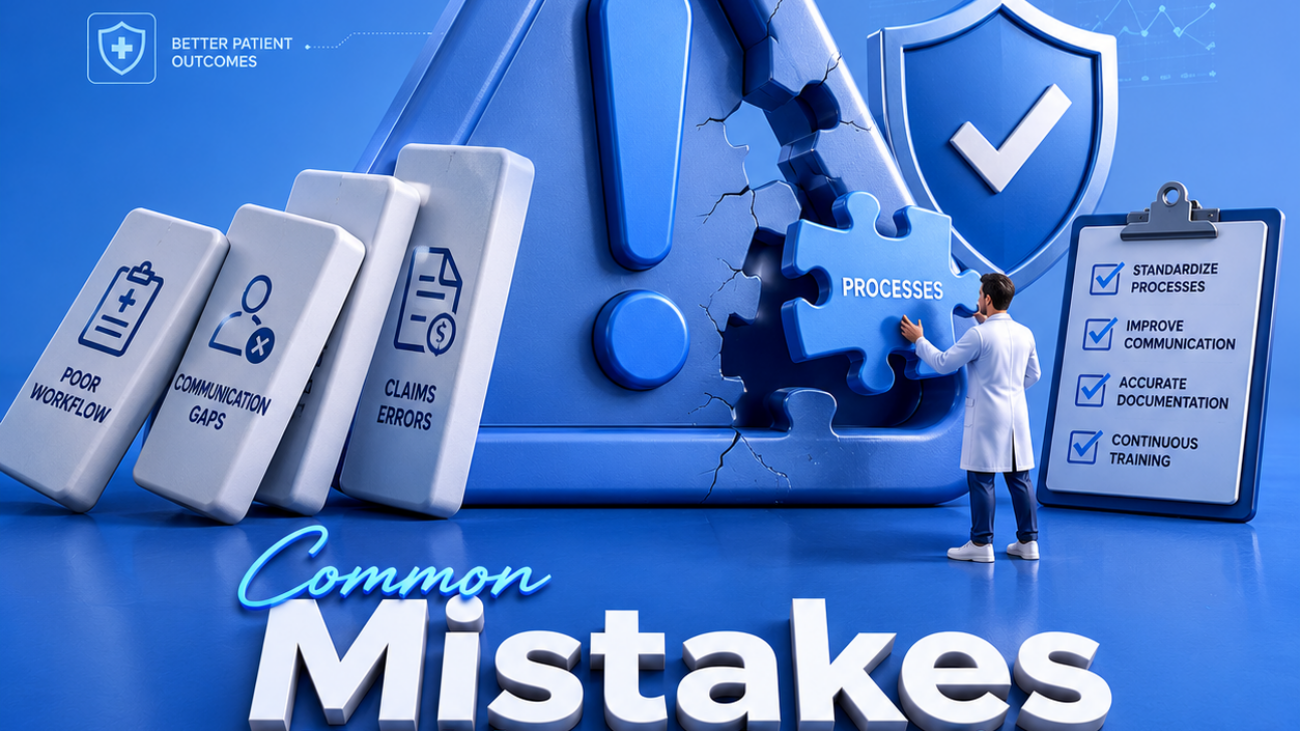

Revenue Cycle Management process in healthcare billing

What is Revenue Cycle Management in Healthcare & Why It Matters

In healthcare, Revenue Cycle Management (RCM) is the process of keeping track of a patient’s money from the time they make an appointment until they pay their bill. It is very important for making sure that healthcare providers get paid on time and that patients have a good experience. In today’s healthcare market, which is very competitive and cost-sensitive, an efficient RCM system is not only necessary for operations but also a strategic advantage. Without it, hospitals and clinics will have to wait longer for payments, get more denials, and lose money.

Understanding Revenue Cycle Management in Healthcare

Revenue Cycle Management is the full financial process that happens when a patient interacts with a healthcare provider. It starts with registering patients and checking their insurance, and it goes on to coding, billing, and collecting payments. Every step is linked, and a small mistake can affect the whole revenue chain. A well-organized RCM process makes sure that all financial operations are accurate, open, and quick.

Why Efficient RCM is Essential for Healthcare Providers

Efficient RCM makes sure that healthcare providers always have money coming in and lowers their financial risks. When operational costs keep going up, it’s very important to manage revenue well. Bad RCM can cause claims to be denied, payments to be delayed, and more work for the administration. A streamlined process, on the other hand, helps organizations stay financially stable and focus more on caring for patients than on money problems.

Improving Cash Flow and Financial Stability

Better cash flow is one of the best things about good RCM. Payments come in faster when billing is done correctly and on time. This lowers the amount of money owed and makes sure the business has enough money to run its daily operations. Healthcare providers can also buy better technology, infrastructure, and services when they have a steady stream of cash.

Reducing Claim Denials and Errors

Claim denials are a big problem in healthcare billing. Errors in coding, wrong patient information, or missing paperwork are the main reasons why claims are denied. Automation and verification processes help cut down on these kinds of mistakes in efficient RCM systems. Healthcare providers can avoid losing money and greatly increase the number of claims that are accepted by finding problems early.

Enhancing Patient Experience

RCM doesn’t just have to do with money; it also affects how happy patients are. Clear billing, correct estimates, and easy payment processes all make people more trusting and happy. Patients today want their medical bills to be clear and for them to have a choice of how to pay. A well-run RCM system keeps patients from getting confused or having to wait, which makes them happier and more loyal.

Role of Technology in Modern RCM

Technology is very important for changing the way RCM works. Tools for automation, AI-driven analytics, and digital platforms all help cut down on manual work and make things more accurate. These technologies make billing easier, claims processing faster, and give you real-time information about how your finances are doing. To stay competitive in the healthcare industry, you need to use advanced RCM solutions as the industry changes.

Importance of Medical Coding and Billing Accuracy

RCM depends on accurate medical coding. It makes sure that healthcare services are correctly turned into standard codes for insurance claims and billing. Even small mistakes can cause claims to be denied or compliance problems. To keep things accurate and avoid losing money, you need skilled workers and up-to-date systems.

Cost Optimization Through Efficient RCM

Healthcare organizations often have trouble with costs that keep going up. Efficient RCM cuts down on administrative costs by cutting down on mistakes and extra work. Automation cuts down on the need for people to do things by hand, which saves time and money. Healthcare providers can improve their financial results without lowering the quality of their services by optimizing their processes.

Strengthening Compliance and Data Security

Strict rules and data protection standards must be followed by healthcare financial processes. When all processes follow compliance rules, efficient RCM systems lower the risk of penalties. Also, safe systems keep private patient information safe, which builds trust and credibility for the organization.

Future of Revenue Cycle Management

Digital transformation and making decisions based on data are the keys to RCM’s future. AI, predictive modeling, and advanced analytics will all play a bigger role in making revenue processes work better. Healthcare providers who use these new technologies early will have an advantage over their competitors and be able to grow in a way that lasts.

Conclusion

Revenue Cycle Management is more than just a billing process—it is the backbone of financial health in healthcare organizations. From improving cash flow to enhancing patient experience, efficient RCM plays a crucial role in overall success. By adopting modern technologies and focusing on accuracy, healthcare providers can overcome challenges and build a sustainable, profitable future.

FAQs

1. What is Revenue Cycle Management in healthcare?
Revenue Cycle Management is the process of managing financial transactions from patient registration to final payment collection.

2. Why is RCM important for hospitals?
RCM ensures timely payments, reduces claim denials, and improves financial stability.

3. How does RCM improve patient experience?
It provides transparent billing, accurate estimates, and smoother payment processes.

4. What are common challenges in RCM?
Claim denials, coding errors, delayed payments, and administrative inefficiencies are common challenges.

5. How can technology improve RCM?
Technology automates processes, reduces errors, and provides real-time financial insights.

Image illustrating effective claims management strategies that reduce denials and enhance cash flow.

Best Practices for Claims Management: Reducing Denials and Boosting Cash Flow

Claims management is very important in fields like healthcare, insurance, and finance because it helps keep things running smoothly and keeps the company’s finances healthy. But a claims process that isn’t well managed can cause big delays, more denials, and problems with cash flow. Businesses that depend on claims to make money need to lower the number of denials and make the claims process as efficient as possible. But how can you reach these goals in a good way?

In this post, we’ll talk about the best ways to handle claims, focusing on methods that lower the number of denials, make things run more smoothly, and, in the end, increase cash flow. Businesses can speed up their claims process and improve their cash flow by taking the right steps.

Verify Patient/Client Information Early

One of the first and most important steps in the claims process is making sure that all of the information about the patient or client is correct. Claims are often denied because of missing or wrong information.

Best Practice:
Before you send in claims, make sure to double-check all the important information, such as the patient’s age, insurance information, and policy coverage. This step makes it less likely that claims will be denied because of wrong information and makes sure that the billing process goes smoothly.

Businesses can speed up this process by using automated verification tools. This makes sure that claims are submitted correctly the first time.

Utilize Technology for Claim Submission and Tracking

One of the best ways to cut down on mistakes and speed up the claims management process is to use technology.

Best Practice:
Set up electronic claims submission systems that work with insurance platforms. These tools make it possible to submit things more quickly and accurately, which lowers the risk of denials. Also, they let you track claims in real time, so your team can find and fix problems quickly before they get worse.

Putting money into a strong claims management system can help automate workflows, keep track of claim status, and give you detailed reports. All of these things can help you get your money faster by cutting down on delays.

Regularly Review and Update Policies and Procedures

Regularly review your claims management policies and procedures to stay ahead of possible denials. If you don’t keep up with the latest billing rules, codes, or procedures from your insurance company, your claims may be denied.

Best Practice:
Take some time every three months to go over your insurance policies, the most common reasons for claim denial, and any changes in the rules that could affect your claims. Making sure your team knows about these changes will lower the number of mistakes and raise the number of claims that are accepted.

It’s also important to train your staff on the most up-to-date coding standards and rules for submitting claims to keep your process running smoothly and quickly.

Conduct Root Cause Analysis on Denials

To make your process better, you need to know why your claims are being denied. Root cause analysis can help you figure out why problems keep happening and how to fix them.

Best Practice:

Don’t just send in a claim again if it gets denied. Look into why the denial happened in the first place. Are there mistakes in the code? Not enough paperwork? Or did the insurance company get the claim wrong? Take care of these problems to lower the chances of future denials.

Regularly looking at denial trends and taking steps to fix them will help make your claims submissions more accurate and timely overall.

Improve Communication with Insurance Providers

 A key part of managing claims well is being able to talk to insurance companies clearly and consistently. Unnecessary denials or late payments can happen if communication is slow or unclear.

Best Practice:
Keep in touch with your insurance company so you can clear up any questions or problems quickly. Set up regular meetings or calls to talk about the status of claims, especially for complicated ones. You can get your claims approved faster and get your money faster if you build a good relationship with your providers.

Automate and Streamline Your Payment Processes

Once claims are approved, ensuring timely payments is just as important as getting the claims submitted correctly.

Best Practice:
Automate your payment processes wherever possible. Set up automatic reminders for follow-up, and track outstanding claims to avoid payment delays. Automating billing and payment collections can drastically reduce the time it takes to receive payments, leading to improved cash flow.

Conclusion

Implementing best practices in claims management is essential for reducing denials and boosting cash flow. By verifying information, utilizing technology, conducting root cause analysis, maintaining good communication with insurance providers, and automating payment processes, businesses can optimize their claims management workflows. These strategies will help ensure timely payments, reduced denials, and improved financial outcomes.

FAQ Section

Q1: What are the common reasons for claim denials?
Common reasons for claim denials include incorrect patient information, coding errors, missing documentation, and failure to meet insurance policy requirements. Regular verification, accurate coding, and clear documentation can reduce these denials.

Q2: How can technology help in claims management?
Technology helps automate claims submission, tracking, and reporting. Electronic claims submission systems streamline the process, reducing errors and improving the speed of reimbursement. Additionally, real-time tracking allows for prompt issue resolution.

Q3: Why is root cause analysis important for claims management?
Root cause analysis helps identify the underlying reasons for claim denials, enabling businesses to correct recurring issues and improve their claims process. By addressing these causes, businesses can significantly reduce future denials.

Q4: How can communication with insurance providers improve claims success?
Effective communication ensures that any ambiguities or issues with claims are resolved quickly. Regular communication with insurance providers helps clarify claim statuses, address disputes, and expedite the approval process.

Q5: How can I ensure faster payments once a claim is approved?
Automating payment reminders, tracking outstanding claims, and streamlining billing processes can ensure that payments are received promptly after claims are approved. Automating these steps reduces delays and improves cash flow.

AI technology analyzing healthcare billing data to reduce claim denials in US medical practices

AI in Revenue Cycle Management: Hype vs Reality for US Healthcare Providers

Artificial intelligence is rapidly becoming a major talking point in healthcare administration, especially in medical billing and revenue cycle management (RCM). While many vendors position AI as a complete solution, the reality is more nuanced. The real value of AI lies not in replacing billing teams but in improving accuracy, efficiency, and decision making across the billing lifecycle.

For many healthcare practices in the United States, claim denials are no longer just an operational inconvenience. They represent a significant financial drain. Small front office errors such as incorrect patient information or missed eligibility checks can lead to denied claims weeks later, consuming valuable staff time and often resulting in lost revenue.

Recent industry data highlights the seriousness of the issue. A growing percentage of providers report denial rates exceeding ten percent, and a large portion of denied claims are never resubmitted. This makes prevention far more critical than correction.

Can AI Eliminate Claim Denials Completely

The short answer is no, but it can significantly reduce them.

AI systems are highly effective at identifying patterns in historical claims data. This allows them to flag potential issues such as coding inconsistencies, missing documentation, or eligibility errors before claims are submitted.

However, not all denials are preventable through automation. Payer specific policy changes, incomplete clinical documentation, and workflow gaps still require human judgment. AI works best as a support system that enhances decision making rather than replacing it.

The most successful practices use AI as a pre submission checkpoint, catching errors before they become costly problems.

Where AI Delivers the Most Value in the Billing Workflow

One of the biggest sources of claim denials originates at the very beginning of the patient journey, during registration and intake.

Errors such as incorrect insurance details, outdated coverage information, or missed eligibility verification are common. AI powered eligibility tools can instantly validate patient data, insurance coverage, and coordination of benefits in real time.

By addressing these issues upfront, practices can significantly reduce denial rates. In fact, some implementations have reported reductions of over forty percent in preventable denials.

Another powerful application is predictive analytics. AI can assign a risk score to claims before submission, helping teams prioritize high risk cases for review. This targeted approach saves both time and resources while improving overall accuracy.

AI in Payment Posting and Back End Operations

AI also plays a valuable role in payment posting and reconciliation.

Automated systems can match remittance advice with claims, reduce manual data entry, and speed up payment processing. This improves efficiency, especially in high volume practices.

However, automation at this stage cannot fix upstream issues. If claims are submitted with errors, faster payment posting will not prevent denials. That is why successful RCM strategies focus on improving data accuracy at the source before optimizing backend processes.

AI can also support compliance by identifying unusual billing patterns and reducing the risk of audits, provided there is proper oversight.

Why Many Practices Are Still Hesitant to Adopt AI

Despite the benefits, adoption of AI in medical billing remains relatively low, especially among independent practices.

The main barriers include:

  • High implementation costs
  • Integration challenges with existing EHR and billing systems
  • Staff training requirements
  • Data security concerns

Many AI solutions are designed for large health systems, making them complex for smaller practices to implement.

However, the cost of inaction is increasing. Coding related denials have risen sharply in recent years, putting additional pressure on already thin margins. This makes a strong case for adopting AI strategically rather than avoiding it altogether.

How Practices Should Approach AI Adoption

The most effective approach is to start with a clear understanding of the problem rather than jumping straight into technology.

A denial root cause analysis helps identify where errors occur and which issues have the greatest financial impact. Based on this, practices can prioritize their AI investments.

A practical implementation roadmap includes:

Improve Patient Intake and Eligibility Verification

This is the easiest and most impactful starting point. AI can significantly reduce errors at this stage with minimal complexity.

Introduce Coding Decision Support

If coding errors are a major issue, AI tools can help ensure accuracy and reduce audit risks.

Implement Predictive Denial Management

Once data quality improves, predictive tools can help proactively manage high risk claims.

Does AI Replace Billing Teams

Absolutely not.

AI is most effective when it works alongside experienced billing professionals. While it can automate repetitive tasks and highlight patterns, it cannot replace human expertise, especially when clinical context and payer specific knowledge are involved.

The best performing practices use AI to enhance productivity while keeping skilled professionals in control of critical decisions.

The Real Shift AI Brings to Revenue Cycle Management

The biggest transformation AI offers is a shift in mindset.

Instead of focusing on fixing denied claims after they occur, practices can prevent errors before claims are submitted. This proactive approach improves cash flow, reduces administrative burden, and enhances overall operational efficiency.

AI makes this shift possible, but its success depends on how thoughtfully it is implemented.

As healthcare continues to evolve, the practices that benefit the most will not be those that adopt AI the fastest, but those that apply it in the right areas with the right strategy.