
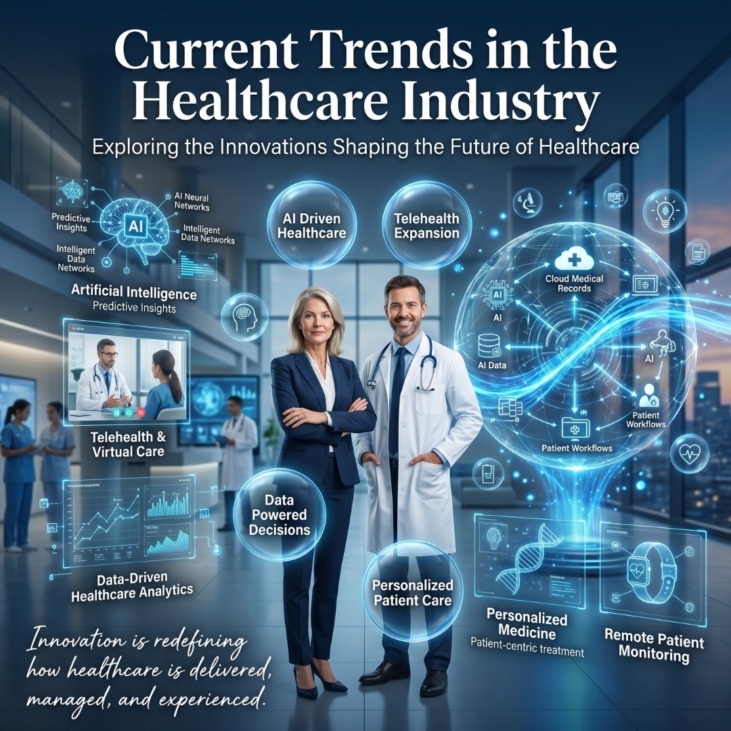
The healthcare industry is changing fast due to technology, patient expectations, rising operational demands and the need for better care delivery. Current healthcare trends are all about improving patient outcomes, access, reducing costs, and increasing healthcare operations efficiency. Healthcare providers are harnessing these trends (from telemedicine to artificial intelligence and automation to patient-centered care) to deliver smarter, faster and more reliable services.
Digital Transformation in Healthcare
One of the most important trends in healthcare is digital transformation. Hospitals and clinics are shifting from manual systems to digital platforms for patient records, appointment scheduling, billing and communications.
Through Electronic Health Records, cloud-based systems and digital dashboards, healthcare providers are able to access patient information quickly and securely. That improves inter-departmental coordination, reduces paperwork and speeds up decision making.
Growth of Telemedicine
Telemedicine has become an important part of modern health care. Now with video calls, mobile apps and online platforms, patients can consult doctors without going to the hospital physically.
This trend increases access to health care, especially for those living in remote areas or with limited schedules. It also reduces waiting time, improves convenience and helps healthcare providers to manage patient consultations more efficiently.
Artificial Intelligence in Healthcare
Artificial Intelligence is transforming healthcare by assisting doctors, hospitals and administrators to make better decisions. AI tools can help with diagnosis, reviewing medical data, predicting patient risks and automating repetitive tasks.
AI also finds use in healthcare operations for billing, claims processing, appointment reminders and patient engagement. This leads to greater accuracy, less manual work and allows healthcare organizations to work more efficiently.
Automation in Healthcare Operations
Automation helps healthcare providers reduce repetitive manual tasks. Now, appointment scheduling, patient registration, medical billing, insurance verification, follow-ups etc. can be automated.
This saves time, minimizes errors and provides healthcare staff with more time to focus on patient care. Automation boosts workflow efficiency and helps healthcare organizations cope with increasing patient volumes.
Patient-Centered Care
Healthcare is changing from provider-centric services to patient-centric care. Today’s patients want clear communication, personalized treatment, transparent billing and easy access to healthcare information.
Patient portals, mobile apps, feedback systems and digital reminders are helping in improving overall patient experience. This trend promotes transparency and helps patients engage better in their own health journey.
Remote Patient Monitoring
The use of remote patient monitoring is on the rise, particularly in the management of chronic diseases. Devices including smartwatches, wearable monitors and connected medical devices are used to track patient health in real time.
Doctors can remotely monitor vital signs, activity levels, blood pressure, glucose levels and other health indicators. This enables early intervention and prevents unnecessary hospital visits.
Data Analytics for Better Decisions
Healthcare organizations are using data analytics to improve patient care and operational efficiency. Data helps to identify patient trends, treatment outcomes, resource utilization and financial performance.
Analytics enables healthcare providers to make informed decisions, improve staffing, reduce costs and improve service quality. Data driven healthcare is rapidly becoming a requirement for long term success.
Cybersecurity and Data Protection
Protecting patient data has become a major priority as healthcare migrates to the digital realm. Hospitals and clinics store medical and financial information so cybersecurity is very important.
To avoid data breaches, healthcare providers are investing in secure systems, encryption, access control and staff training. Strong cyber security helps maintain patient trust and meet regulatory requirements.
Conclusion
The healthcare industry is undergoing rapid evolution with digital transformation, telemedicine, AI, automation, remote monitoring, and patient-centered care. These changes are allowing healthcare organizations to enhance efficiency, reduce costs and provide better patient experiences. The health care providers that adapt to these trends will be better positioned to meet future challenges and grow in the long term.
FAQs
1. What are the current trends in healthcare?
Current trends include telemedicine, AI, digital transformation, automation, remote patient monitoring, and patient-centered care.
2. How is technology changing healthcare?
Technology improves patient care, reduces manual work, supports faster decisions, and makes healthcare services more accessible.
3. Why is telemedicine important?
Telemedicine allows patients to consult doctors remotely, improving convenience and healthcare access.
4. How does AI help healthcare providers?
AI supports diagnosis, data analysis, billing automation, patient engagement, and operational efficiency.
5. Why is cybersecurity important in healthcare?
Cybersecurity protects sensitive patient data and helps healthcare organizations maintain privacy and trust.