
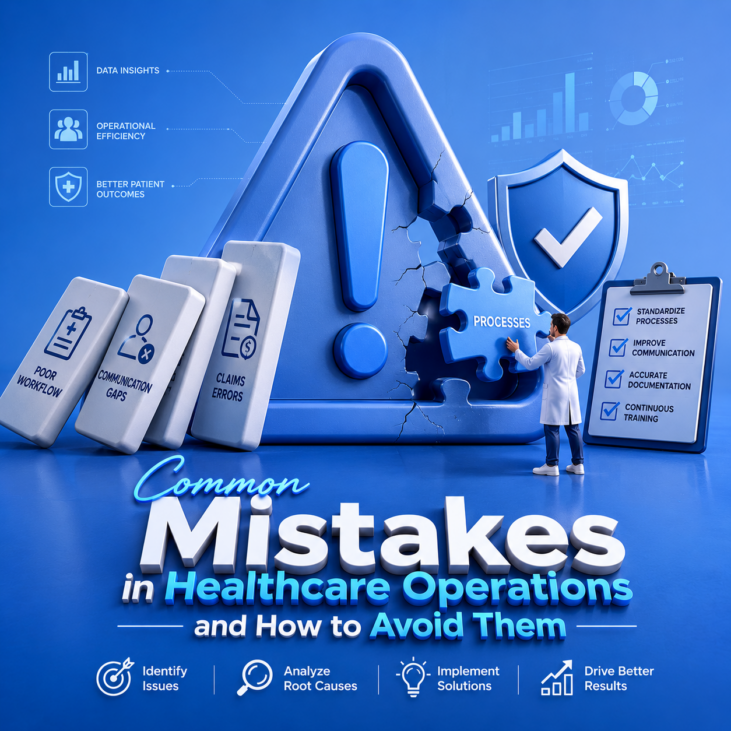
Healthcare operations require you to balance multiple departments, workflows, patient services, admin work and financial processes simultaneously. Healthcare systems are complex and minor operational mistakes can lead to delays, increased costs, decreased patient satisfaction, and compliance problems. Running healthcare operations efficiently is critical to delivering quality care to patients while ensuring smooth running of the hospital or clinic.
Many healthcare organizations are plagued by operational inefficiencies, arising from outdated systems, poor communication, manual processes, and ineffective resource management. Knowing these common mistakes and how to avoid them can help you improve healthcare performance, patient outcomes, and overall operational efficiency by a significant margin. In this blog, we’ll explore some of the most common operational mistakes in healthcare and practical ways to address them.
Poor Communication Between Departments
Poor communication between departments is a common problem in healthcare operations. Hospitals and clinics need doctors, nurses, laboratories, pharmacies, billing and administration staff to work together. The patient information may be delayed, misinterpreted or even lost due to communication gaps.
Inadequate communication can cause scheduling conflicts, treatment delays, billing errors, and dissatisfaction among patients. To prevent this problem, healthcare organizations need to implement centralized communication systems, and integrated healthcare management platforms. Digital communication tools and real time data sharing support more efficient collaboration among departments and better coordination of patient care.
Inefficient Patient Scheduling and Long Waiting Times
Another major operational challenge in healthcare is patient scheduling problems. Overbooking can lead to longer patient wait times and unnecessary stress for patients and healthcare workers alike due to appointment delays and poor scheduling systems.
Lengthy waits are harmful to patient experience and operational productivity. Healthcare organizations can sidestep these issues by employing automated scheduling systems, appointment reminders and patient management software. Digital scheduling tools help healthcare facilities maximize appointment slots, cut down on no-shows, and improve overall patient flow.
Dependence on Manual Processes
The healthcare industry remains heavily dependent on manual paperwork and antiquated administrative processes. Errors, delays, and missing information can arise from manual data entry. It also wastes valuable time that healthcare staff could use for patient care.
Healthcare organizations can reduce manual work and improve accuracy by implementing Electronic Health Records (EHR), automated billing systems, and digital workflow solutions. Automation saves time and improves efficiency in operations. It reduces paperwork and human error.
Poor Inventory and Resource Management
Healthcare organizations manage huge volumes of medical supplies, medications and equipment every day. Poor inventory management can lead to supply shortages, expired products, or unnecessary overstocking, all of which ramp up operational costs.
To avoid these problems, healthcare providers should use inventory management software that automates the reordering processes and tracks stock levels in real time. With proper resource planning, healthcare facilities can reduce waste, manage their costs, and have the right supplies available when they are needed.
Lack of Staff Training and Development
The health care technology and operating systems continue to evolve at a rapid pace. Operational mistakes and reduced productivity can result from healthcare professionals not being able to use new systems effectively due to a lack of staff training.
Regular training programs are conducted to keep employees updated on healthcare technologies, compliance requirements and operational procedures. Investment in staff development improves performance, builds confidence and helps healthcare teams cope with changing operational demands.
Ignoring Data Analytics and Reporting
Healthcare organizations produce a huge amount of operational and patient data every day. However, many facilities do not effectively leverage this data to improve their operations and decision-making.
Not using data analytics can prevent healthcare providers from identifying workflow bottlenecks, financial inefficiencies and patient care issues. Modern healthcare management systems provide reporting and analytics tools that enable organizations to monitor performance, identify operational trends, and make informed decisions.
Healthcare analytics helps organizations to optimize staffing, improve patient flow, reduce operational costs and increase overall efficiency.
Weak Cybersecurity and Data Protection
As healthcare operations have become more digitized, the protection of patient and financial data has become even more critical. Weak cybersecurity systems can make healthcare organizations vulnerable to data breaches, ransomware attacks, and compliance violations.
Healthcare providers must invest in secure IT infrastructure, encryption, multi-factor authentication, and regular training of staff in cybersecurity. Robust data protection measures ensure patient privacy, build trust and keep healthcare operations secure from security threats.
Ineffective Revenue Cycle Management
Revenue Cycle Management (RCM) is a critical component of healthcare operations. Errors in medical billing, coding, insurance verification and claims processing can delay payment and cost you money.
Healthcare organizations can enhance RCM through automated billing systems, AI-powered coding tools, and claim verification platforms. Simplifying financial workflows helps reduce claim denials, improves cash flow, and increases operational efficiency.
Failure to Adapt to Technology
Some healthcare organizations hesitate to adopt modern technologies due to concerns about cost or implementation challenges. However, failing to embrace digital transformation can leave healthcare facilities behind in an increasingly competitive industry.
Technologies such as telemedicine, cloud-based healthcare systems, AI-driven automation, and patient engagement platforms improve operational efficiency and patient care. Healthcare organizations that adapt to modern technologies are better positioned to meet patient expectations and improve overall performance.
Conclusion
Healthcare operations play a vital role in ensuring smooth hospital management, patient satisfaction, and financial stability. Common mistakes such as poor communication, inefficient scheduling, manual processes, weak cybersecurity, and poor resource management can significantly impact healthcare performance.
By adopting modern technologies, improving staff training, automating workflows, and using data-driven decision-making, healthcare organizations can avoid operational mistakes and build more efficient healthcare systems. Continuous process improvement and digital transformation are essential for delivering high-quality patient care and achieving long-term healthcare success.
FAQs
1. What are common mistakes in healthcare operations?
Common mistakes include poor communication, inefficient scheduling, manual processes, weak cybersecurity, poor inventory management, and billing errors.
2. How can healthcare organizations improve operational efficiency?
They can improve efficiency through automation, digital healthcare systems, staff training, and better communication tools.
3. Why is patient scheduling important in healthcare operations?
Efficient scheduling reduces waiting times, improves patient flow, and enhances overall patient satisfaction.
4. How does technology help healthcare operations?
Technology improves workflow automation, communication, patient management, billing accuracy, and operational decision-making.
5. Why is cybersecurity important in healthcare?
Healthcare systems store sensitive patient data, making strong cybersecurity essential for protecting privacy and preventing data breaches.